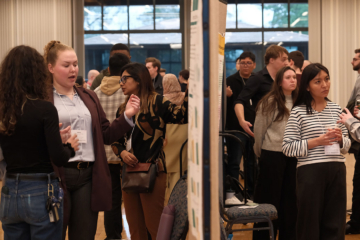
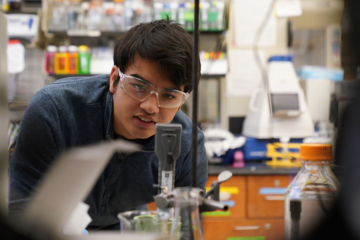
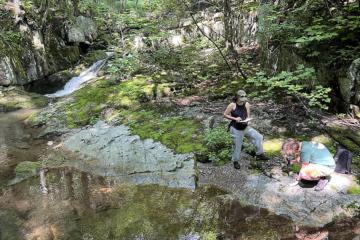
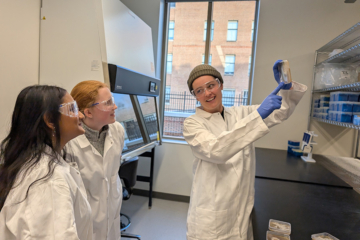
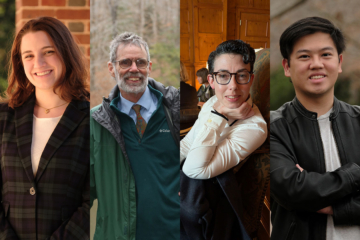
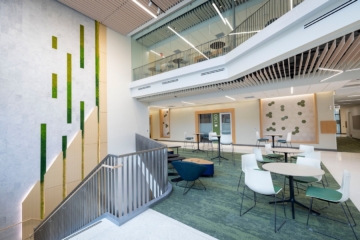
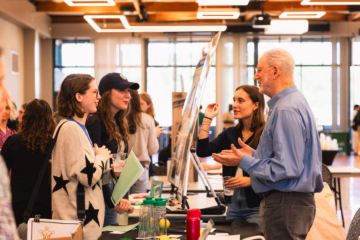
The third annual Undergraduate Research Opportunities Fair drew a record crowd to Sadler Center's Chesapeake Room Oct. 15, with more than 270 students exploring the expansive array of multidisciplinary research opportunities available on campus.
International study shows college students who experienced family dysfunction as children sometimes turn to alcohol to cope with the long-term impacts.
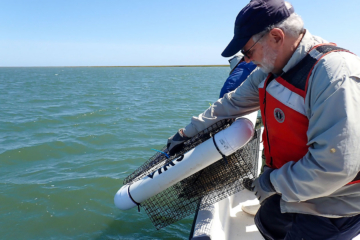
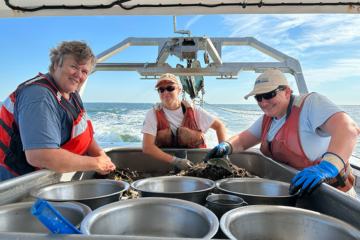
Once locally extinct, the Virginia bay scallop population is increasing exponentially due to restoration work by W&M’s Batten School & VIMS Eastern Shore Laboratory.
A new study published in the journal Marine Ecology Progress Series reveals American lobster embryos can handle ocean acidification surprisingly well, but increased temperatures may pose distinct challenges for the species.
A new study shows that an ongoing transition from eelgrass to widgeon grass as the dominant seagrass species in the Chesapeake Bay could have ecological impacts across food webs, fisheries and ecosystem functions.
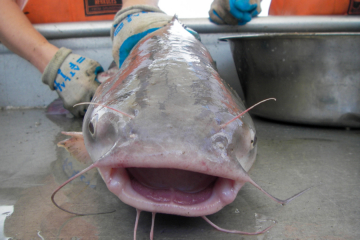
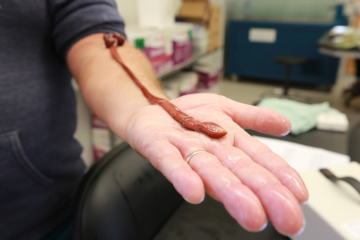
A new study published in the journal PLOS One by researchers at William & Mary’s Batten School & VIMS suggests parasitic worms could serve as a valuable biomarker for managing the fishery.
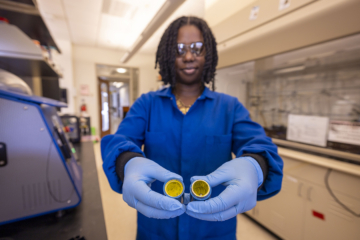
Among those researching on campus this summer are scholars whose work not only seeks to understand the world better but to make it better in the process.
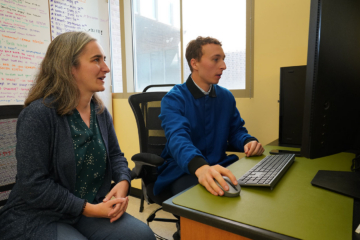
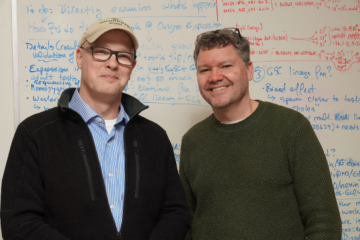
A William & Mary computer science professor and his doctoral students are designing a way of diagnosing bugs in computer chips that will make it easier for designers to find and fix them.
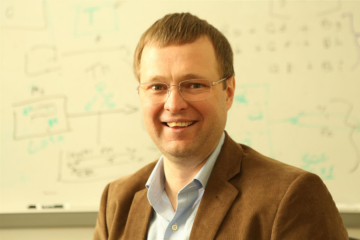
Doug Schmidt, the inaugural dean of W&M's new School of Computing, Data Sciences & Physics, will deliver the spring Tack Faculty Lecture on the subject of artificial intelligence.
Former NASA Chief Scientist Ellen Stofan ’83, D.Sc. ’16, P ’10, P ’14 weighs in on the terrestrial object that had a historic chance of impacting Earth.
William & Mary professor Alexander Nwala and his students have built a website the public can use to find news sources of local information all over the United States and the world.
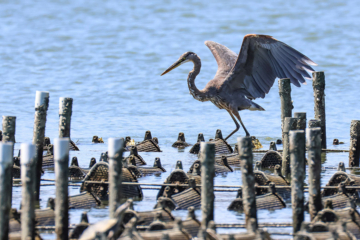
A recent study has shown that oyster management practices in the Rappahannock River benefit both the health of the oyster reefs as well as the fishery.
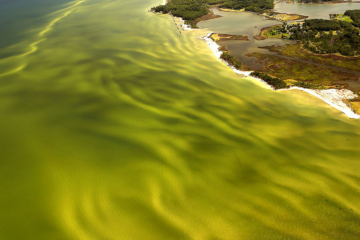
Researchers at William & Mary's Batten School & VIMS are researching the critical role played by various algae in maintaining the health of not only their own habitats but of coastal communities worldwide.
The interdisciplinary collaboration between W&M’s IIC, Malagasy communities and Conservation International increases the affordability and accessibility of monitoring water quality.