
For nearly a century, scientists have been trying to “bottle the sun” by recreating the nuclear fusion reactions that power it and finding ways to harness the energy they release. Although researchers have made significant progress, turning fusion into a practical source of clean, affordable energy remains a challenge.
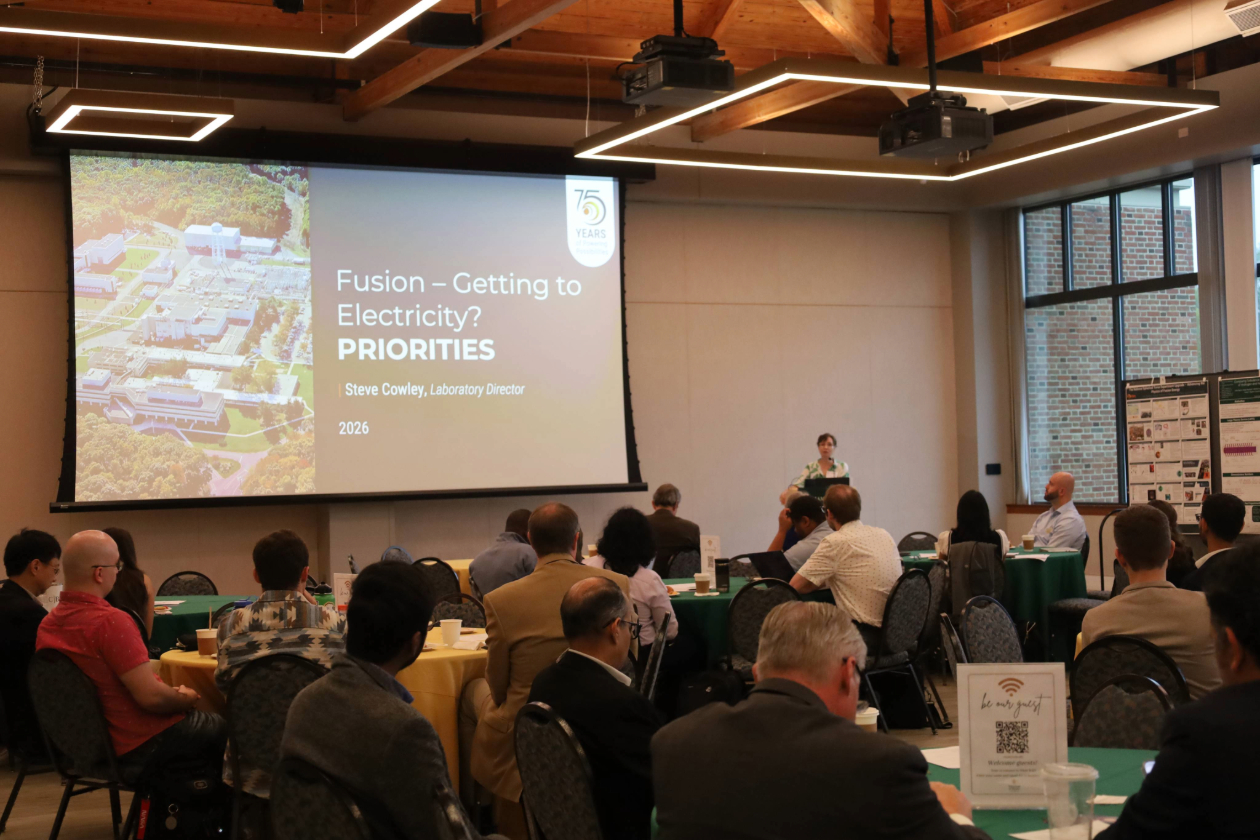
Last week, researchers, industry leaders, policymakers and students gathered at William & Mary for the first-ever Virginia Nuclear Fusion Symposium, an event designed to foster connections among the people and institutions working to make fusion energy a reality.
“Fusion promises to be the perfect energy source,” said Steven Cowley, the director of the Princeton Plasma Physics Laboratory, in his keynote address. Despite it being a very early-stage technology, Cowley is optimistic that commercial fusion energy could be possible in the next 20 years.
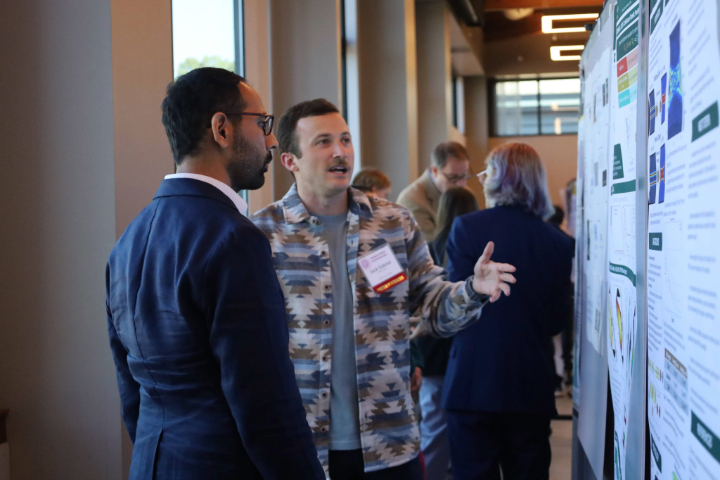
Held at the Sadler Center on Oct. 16, the symposium welcomed more than 100 registered attendees and featured expert talks, research poster presentations and a closing panel on Virginia’s role in fusion energy. Organized by William & Mary’s Associate Physics Professor Saskia Mordijck, the day’s events offered an opportunity to discuss some of the challenges fusion faces and explore how collaboration across universities, government agencies and private companies could help advance the field.
Virginia’s growing position in the industry is reflected in proposed plans for the world’s first fusion power plant, ARC, in Chesterfield County. Developed by Commonwealth Fusion Systems — a Massachusetts-based fusion energy company — the 400-megawatt plant marks a major step toward making fusion a commercial source of electricity. Construction is set to begin within the next two years, with plans to be operational in the early 2030s. If successful, ARC could put Virginia at the forefront of the industry.
Alex Creely, chief engineer for ARC, told attendees that Virginia is already leading the way in implementing the licensing process for the plant. The work involved in bringing ARC to Virginia also highlights the range of expertise needed to turn research to practice. “Fusion as a field and as an industry is incredibly multidisciplinary,” Creely said during the panel session.
Beyond physicists and electrical, mechanical and nuclear engineers, the industry also needs people with law, policy and finance expertise. Their work will be essential to navigating the regulatory requirements and practical challenges involved in developing fusion energy.
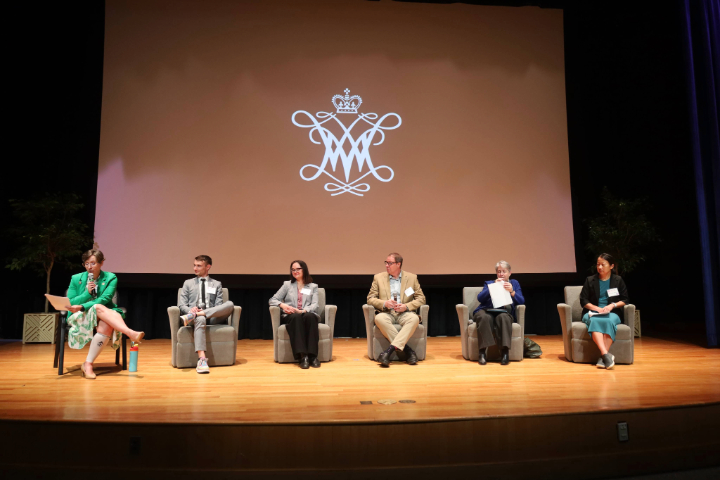
The panelists also discussed how universities, research institutions, and industry can work together to advance fusion development, through partnerships, workforce development initiatives and early engagement with students.
“You are a great, great source of talent for the nation,” Colleen Nehl, a program manager in the U.S. Department of Energy’s Office of Fusion Energy Sciences, told the audience of W&M’s contribution.
Nehl emphasised the need for collaboration, specifically between government agencies, universities and private companies. She said public-private partnerships could help provide the infrastructure needed to address challenges such as the need for specialized facilities to test materials.
For the university, partnerships with national laboratories and other Virginia research institutions would create shared infrastructure and expertise that would address challenges it could not tackle alone. Vice Provost of Research Alyson Wilson reiterated the importance of events like the symposium in connecting potential partners and creating opportunities for collaboration.
“It’s very difficult to imagine that [William & Mary] could be better situated,” Wilson said. She hopes that in establishing collaborations now the university will be prepared to take advantage of research opportunities in the future.
Fission vs. fusion
These partnerships could also help prepare the next generation of fusion experts. For students, the symposium offered an opportunity to present their work, ask questions and connect directly with professionals.
Sierra Tutwiler, a fourth-year Ph.D. student in mechanical and nuclear engineering at Virginia Commonwealth University, attended with Lane Carasik, VCU associate professor of nuclear engineering and a member of the organizing committee. She said the event helped her recognize the extent of fusion research taking place across Virginia.
“I didn’t realize how much was happening locally in Virginia itself,” she said. “It has a lot of opportunities in the fission space, but I didn’t realize how many opportunities it has in the fusion space and how many different universities are trying to collaborate.”
Tutwiler said she valued the opportunity to connect with researchers from other institutions and hoped the symposium would lead to new collaborations for her research group.
The Department of Energy developed a fusion roadmap that outlines goals for advancing fusion toward commercial power, including the need for infrastructure and collaboration across institutions. However, meeting those goals will depend on continued scientific advances, and researchers still have technical challenges to resolve before fusion can become a practical source of electricity.
Fusion reactions use plasma, an electrically charged gas heated to extreme temperatures, to combine atomic nuclei to release energy. In magnetic-confinement reactors, powerful magnetic fields hold the plasma in place to maintain the conditions needed for fusion. However, turbulence can make the plasma difficult to confine and limit the efficiency of the process. Researchers are working to improve plasma confinement, reduce turbulence and lower the scale and cost of fusion reactors. According to Cowley, continued innovation in these areas will be essential to making commercial fusion possible.
Security implications
Fusion research and commercialization also raise policy and national security questions. Through the Global Research Institute’s Seed program, Mordijck and Associate Professor of Government Jeffrey Kaplow are examining the potential national security implications of commercial fusion energy.
Since international safeguards and export controls to prevent the spread of nuclear weapons are primarily designed for fission technology, the pair are collaborating to develop a framework to address proliferation risk specifically for fusion technology. Fusion reactors could use or produce materials with weapons applications, and the knowledge gained from fusion research overlaps with the science of nuclear weapons. The researchers plan to convene an interdisciplinary workshop and develop policy recommendations for U.S. and international stakeholders.
The seed funding supports pilot research intended to generate preliminary data and help researchers find external funding and partnerships. The project illustrates how the university’s contribution to fusion research extends beyond the science itself to the security and policy questions that may emerge as the technology develops.
These efforts reflect the scale of the work still ahead and the importance of bringing together the expertise and resources needed to address it.
For Mordijck, the symposium was a first step toward building those connections. She also hopes that future symposia can rotate between Virginia universities and research labs, extending access to build a broader research community.
“We had a lot of people take a chance on us,” she said. “I’m grateful that they want to do this again.”