
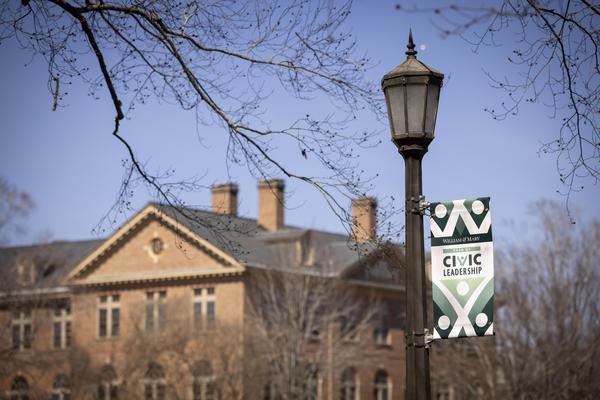
As William & Mary celebrates its Year of Civic Leadership, a new national recognition is underscoring the university’s longstanding commitment to preparing students not only for careers, but for meaningful participation in democracy.
William & Mary has received the ALL IN Campus Democracy Challenge’s 2026 Highly Established Action Plan Seal, a designation awarded to institutions with exemplary plans to advance nonpartisan civic engagement, civic learning and student voter participation.
While the recognition highlights the strength of William & Mary’s democratic engagement strategy, university leaders say the real story is broader than any single award. It’s about creating a campus culture in which civic participation is informed, accessible and woven throughout the student experience.
“Civic leadership is about much more than voting or participating in a single event. It’s about helping students develop the habits and skills to engage thoughtfully with their communities, build relationships across differences and take action for the common good,” said Roxane O. Adler Hickey, assistant provost for leadership & academic engagement.
The Civic Action Scorecard, for example, challenges students to take any of 80-plus opportunities to participate in democracy and civic leadership and be recognized for their efforts. Voting and volunteering are on the list but so are researching the city budget, writing an op-ed, reading a United States founding document or attending a court case.
Sasha White ’30 researched the city of Williamsburg’s adopted budget.
“It gave me a lot of insight about the priorities of the city and ways that I might want to advocate for change in the future,” she said.
Sophie Mekbeb ’29 took (and passed) the U.S. citizenship practice test.
“It reinforced how foundational facts about government, history and rights shape participation in democracy and informed citizenship,” she said.
Civic engagement as an educational experience
ALL IN’s seal of approval arrives at a particularly fitting moment. Throughout the 2026-2027 academic year, William & Mary has centered its Year of Civic Leadership initiative around a simple but ambitious goal: encouraging every member of the university community to take action for the common good.
That focus is rooted in the university’s history. It reflects a comprehensive action plan designed to promote democratic engagement in ways that are intentionally nonpartisan. Rather than focusing solely on voter turnout, the plan supports a broader vision of civic education that encourages students to understand public issues, serve their communities and engage in respectful dialogue.
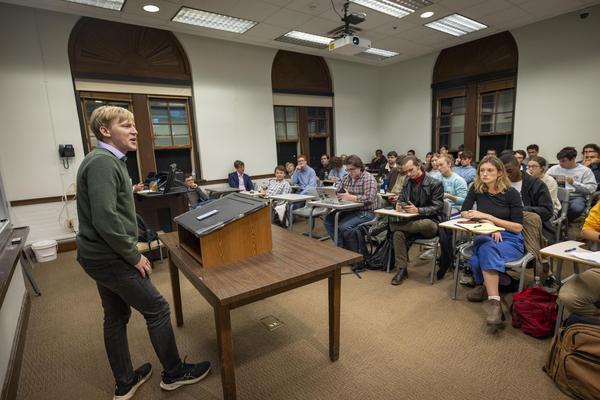
“Through efforts like Better Arguments at William & Mary, we’re giving students opportunities to practice staying curious, listening deeply and engaging with people whose experiences or perspectives may be very different from their own,” said Adler Hickey, chair of the Year of Civic Leadership. “That kind of practice is essential to preparing students not only to participate in democracy, but to lead within it.”
Students encounter those opportunities in classrooms, community partnerships and campus-wide events. In the Civic Leadership Program, a cohort of first and second year students practice civic skills and mindsets together over the course of a year in both coursework and a summer civic impact project.
Aligning the curriculum
Faculty members are also being encouraged to incorporate civic learning into academic experiences. Resources developed through the Studio for Teaching & Learning Innovation help instructors illuminate the connections between civic leadership and coursework across disciplines.
Additional programming, including “Lessons to Go: Bring the Year of Civic Leadership to Your Classroom,” provides faculty with practical approaches for integrating civic leadership principles into their teaching while helping students see themselves as future citizen-leaders.
Phil Wagner, clinical associate professor of organizational behavior in the Raymond A. Mason School of Business, along with fellow colleagues in organizational behavior and business analytics, developed eight robust case studies for MBA students that address civic leadership themes including AI governance and the impact of political polarization on workplace culture.
In “Lessons to Go,” Wagner will walk faculty through the value of matching disciplinary learning outcomes to the university’s core initiatives and provide faculty with a robust set of strategies and insights, including AI tools and prompts.
“Faculty don’t need to invent a new course,” Wagner said. “They simply need a frame. I think many would find that if you can point the work you already assign at the question the university is asking, it’s not only possible, but a huge value-add for our students.”
Lessons to Go: Bringing the Year of Civic Leadership to your Classroom will take place at 11 a.m. Oct. 27 in the Muscarelle Museum of Art Event Hall. RSVP here.
Leadership through participation
University leaders say these efforts reinforce a central idea: Civic engagement is not confined to a single major, department or political perspective. It’s a set of skills and responsibilities relevant to every student.
“At William & Mary, students are challenged to understand their role in civic life and work with others toward the common good, and they rise to that challenge,” said Elizabeth Miller ’11, director of civic and community engagement. “Together they tackle meaningful issues with care, curiosity and a commitment to service. That’s vital to the wellbeing of our campus, broader communities and our shared future.”
The university’s Week of Civic Leadership in September offered a glimpse of what that commitment looks like in practice. Organizers invited students, faculty and staff to participate in at least one act that benefits the common good, whether learning from a new resource, volunteering in the community or performing a simple act of kindness.
The week’s activities highlighted multiple pathways to engagement.
A “Service Saturday” commemorated the 9/11 National Day of Service, connecting civic leadership with community service. National Voter Registration Day programming encouraged students to register and prepare for future elections.
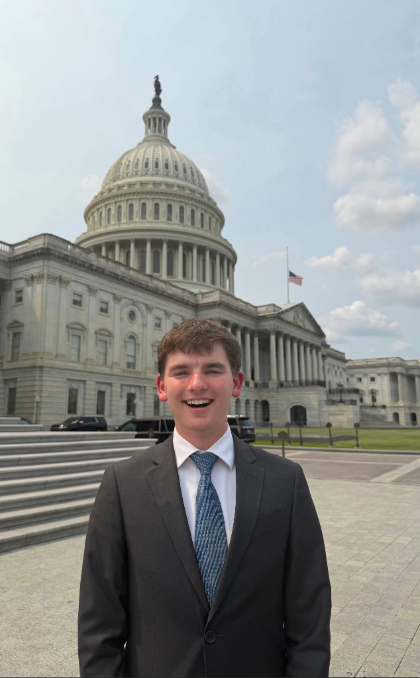
“You can’t walk around this campus in September and not be asked multiple times, ‘Are you registered to vote?’” said Nate Acklie ’29, who plans to major in government and history, has already had three internships at the U.S. Capitol and worked as an election judge at Williamsburg’s Matoaka precinct. “It’s a great way to get involved with the community.”
A live taping of the nationally syndicated podcast, Left, Right & Center, brought the idea and practice of civil discourse to campus. A Student Advocacy Showcase gave students an opportunity to highlight issues and causes that matter to them.
“Working with individuals that I didn’t know was an eye-opening experience,” said Semiya Buckner ’30. “I started new conversations, contributed to the community and formed new relationships with people I would have never had a conversation with outside of this.”
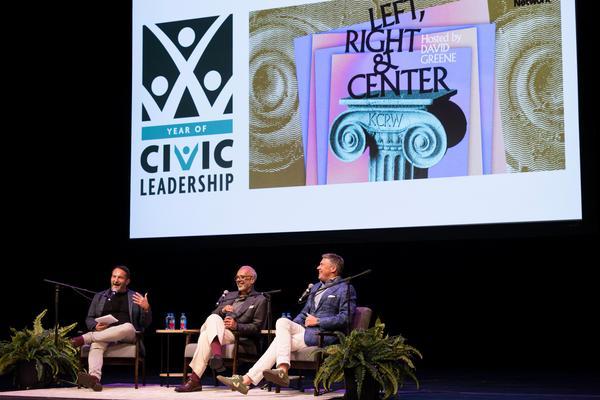
Together, the events reflected the university’s view that civic leadership can take many forms, from service and advocacy to informed discussion and democratic participation.
Looking ahead
The ALL IN seal also positions William & Mary for continued leadership as the nation approaches future election cycles, including the 2026 midterms.
University staff, faculty and student leaders will continue implementing the democratic engagement action plan through voter education efforts, registration initiatives and programming designed to help students navigate complex issues in thoughtful and responsible ways.
Those efforts are closely aligned with William & Mary’s broader educational mission of developing principled leaders equipped to address society’s most pressing challenges.
At a time when civic institutions face increasing polarization and public trust is often strained, university leaders believe higher education has an important role to play in preparing informed and engaged citizens.
“The goal is not simply participation in the next election,” Adler Hickey said. “It is developing the habits of engagement, service and informed leadership that will strengthen communities and democracy for years to come.”
Susan Corbett, Communications Specialist