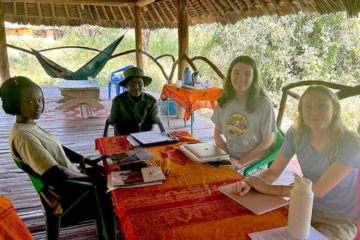
Maasai women rangers share wisdom with William & Mary students.
Undergraduate students presented their findings during a “Gun Policy Summit” in their class, voicing potential solutions to better address gun violence.
The Eisenmann Medal is given to individuals who have contributed significantly to the field of ornithology through extensive research and outreach to young naturalists.
Doug Schmidt, the inaugural dean of W&M's new School of Computing, Data Sciences & Physics, will deliver the spring Tack Faculty Lecture on the subject of artificial intelligence.
ARII grants fund groundbreaking research into democracy, health care and sustainability.
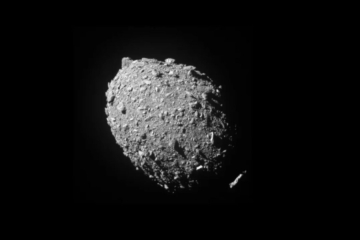
Former NASA Chief Scientist Ellen Stofan ’83, D.Sc. ’16, P ’10, P ’14 weighs in on the terrestrial object that had a historic chance of impacting Earth.
In an era where global challenges demand bold, interdisciplinary solutions, William & Mary's Global Scholars Program is redefining what it means to learn beyond the classroom.
William & Mary professor Alexander Nwala and his students have built a website the public can use to find news sources of local information all over the United States and the world.
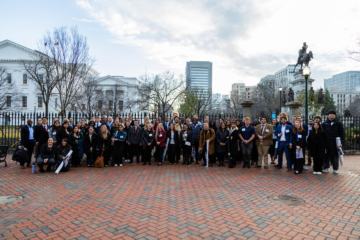
Six W&M students joined researchers from across Virginia for the inaugural Undergraduate Research Showcase at the Capitol.
East Coast estuaries such as the Chesapeake Bay could experience marine heat wave conditions for up to a third of the year by the end of the century.
The March 21-22 event will feature members of the William & Mary and Williamsburg communities as well as attendees from around the country.
Carnegie Corporation of New York funds research that informs public policy.
The code change would switch the economics program from a social science CIP code to a STEM CIP code, providing students with more opportunities post-graduation.
Sharp Journalism Seminar students travel the globe in search of a scoop.
A recent study has shown that oyster management practices in the Rappahannock River benefit both the health of the oyster reefs as well as the fishery.
Researchers at William & Mary's Batten School & VIMS are researching the critical role played by various algae in maintaining the health of not only their own habitats but of coastal communities worldwide.
University receives R1 research activity classification from Carnegie.
William & Mary’s Swem Library has an extensive collection of love letters in the Special Collections Research Center.
Chemistry professor receives new lab equipment that expands research capacity and student training.
Two W&M geology faculty and one alumna now serve as presidents of three of the field’s wide-reaching international societies.
The study, which began back in May and will last until 2027, focuses on how a fast can impact the mind and body.
A look at books published by W&M faculty in 2024.
Former Washington Post journalist Paul Hendrickson has donated his professional papers to W&M Libraries.
The first round of subawards totaling $1.4 million supports 11 projects focused on removing derelict fishing gear from coastal waters in nine U.S. states and Palau.
A dedicated team of W&M researchers has been collecting data on Nigerian monument Sungbo's Eredo for the past five years. Now, analysis begins.
The honor recognizes his outstanding work in atmospheric chemistry and dedication to student research.
The 2024 Chesapeake Bay Dead Zone Report Card suggests hypoxia in the Chesapeake Bay was somewhat larger than the long-term average from 1985-2023 but slightly shorter in duration.
The award recognizes Mayank Chugh’s research contributions and community-building work.
A study has demonstrated surprising variability in the results of different modeling methodologies for predicting future dead zones in the Chesapeake Bay.
The Mental Health Service Professional Demonstration Grant was awarded by the U.S. Department of Education’s Office of Elementary & Secondary Education and the Office of Safe & Supportive Schools.