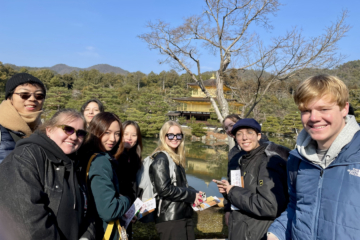
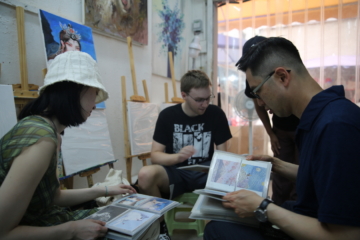
The faculty-led study abroad program offers an opportunity to explore Japan’s Kansai region through engagement with cultural texts, classroom discussions and immersive site visits.
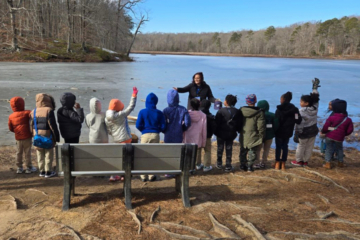
Assistant Professor Kathryn Lanouette is leading a research project to better characterize what outdoor environmental education can look like in urban spaces.
Free and open to the public, the exhibition runs in the Sadler Center Hart Gallery from Nov. 10 until Dec. 5 and features student experiences across a diverse range of mediums and perspectives.
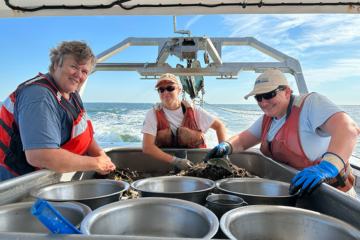
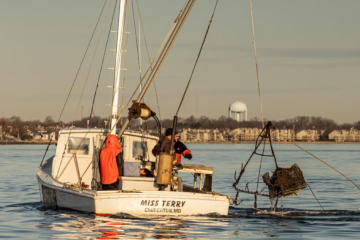
The second round of programmatic funding awarded by William & Mary’s Batten School & VIMS totals $1.8M in support of 13 projects focused on removing derelict fishing gear from coastal waters.
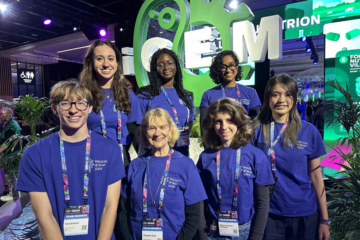
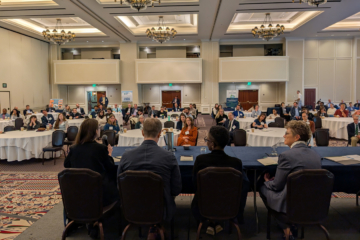
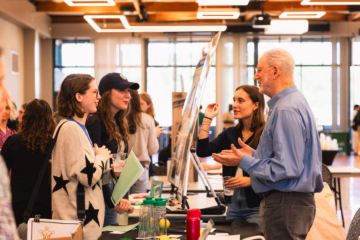
The third annual Undergraduate Research Opportunities Fair drew a record crowd to Sadler Center's Chesapeake Room Oct. 15, with more than 270 students exploring the expansive array of multidisciplinary research opportunities available on campus.
International study shows college students who experienced family dysfunction as children sometimes turn to alcohol to cope with the long-term impacts.
Preliminary results from an ongoing long-term survey suggest that an average year class of young-of-year striped bass was produced in the Virginia tributaries of the Chesapeake Bay in 2025.
As part of the team uncovering the foundations of the historic Williamsburg Bray School, Heather Little M.A. ’23 and Madeline Dorton ’24 are unearthing the history of the campus where they studied history and archaeology…
For some graduate students at William & Mary’s Batten School & VIMS, a new sub-concentration in shellfish aquaculture may be the shining pearl in their degree.
Once locally extinct, the Virginia bay scallop population is increasing exponentially due to restoration work by W&M’s Batten School & VIMS Eastern Shore Laboratory.
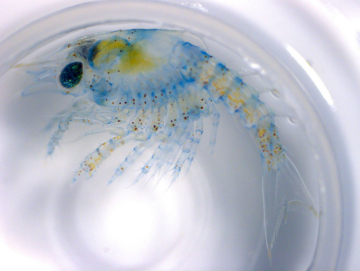
A new study published in the journal Marine Ecology Progress Series reveals American lobster embryos can handle ocean acidification surprisingly well, but increased temperatures may pose distinct challenges for the species.
Beginning this year, the Charles Center will offer grants to support students in expanding the visibility of their work, enabling them to share their discoveries with the world.