
Paul Manna has a quarrel with a cartoon.
“I’m Just a Bill,” the “Schoolhouse Rock!” short that taught generations of Americans how a bill becomes a law, is, in his view – tongue planted firmly in cheek – one of the “greatest disservices to understanding the American legislative process.” The titular bill’s long, long journey from idea to sitting on Capitol Hill leaves out nearly everything that happens after that bill becomes law. Who, then is responsible for its success? What do the rules look like that will guide how government agencies carry it out? How will we know if it is working?
These are important questions, which the famous cartoon leaves aside—and which Manna hope to answer in a new bite-sized radio series.

“Civics Minute,” a collaboration between W&M’s Strategic Cultural Partnerships (SCP) and WHRO Public Media, airs Mondays on WHRV-89.5 FM. Each episode takes one letter of the alphabet (A for accountability, B for ballot, C for civics) and pairs a civic idea with something concrete listeners can do about it. The series launched in September as part of W&M’s Year of Civic Leadership.
“At William & Mary, we believe civic leadership is more than something we study or talk about. It’s something we practice, every day, in our communities,” said Roxane O. Adler Hickey, chair of the Year of Civic Leadership committee. “‘Civics Minute’ is a wonderful example of what happens when we bring together the strengths of our faculty and community partners in service of the public good.”
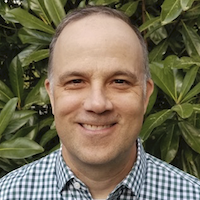
The series is written and hosted by Manna, Hyman Professor of Government and Public Policy at William & Mary, and produced by Conor Molloy and Grace Helmick from SCP. It is Manna’s second project with SCP; he previously served as a faculty fellow.
Molloy knew Manna had already recorded 19 episodes of an earlier podcast, “Democracy in Five Minutes,” and reached out this summer.
“As an expert in this field, Paul was a great fit for this project,” Molloy said. “Not only does Paul have a tremendous skill for synthesizing complex concepts into digestible bites, but he also sounds great on air.””
“We are grateful to be working with Paul again,” said Mark Hofer, executive director of SCP. “As an SCP Faculty Fellow, Paul showed us what happens when a scholar’s expertise meets a community’s real questions. ‘Civics Minute’ carries that same spirit to the airwaves: real scholarships, made practical, reaching people where they are, one minute at a time.”
WHRO has already approved the series to run the full 26 letters of the alphabet.
“Public media helps people understand how world events relate to their own communities. ‘Civics Minute’ supports this mission by making civic engagement easy, relevant, and practical. We’re proud to work with W&M to show Hampton Roads residents that civic leadership isn’t just for elected officials or experts—it begins with understanding local issues and realizing the impact each person can have,” said Bert Schmidt, president and CEO of WHRO Public Media.
C is for civics
Civics, Manna said, is “this broad set of activities that focus on people’s rights that they enjoy as members of a community, the responsibilities they have to that community and the opportunities they have to shape it.”
A lot of civics education, Manna said, dwells on national institutions, famous people and well-known historical events, which can make civic life seem distant. Manna wants people to know that civics is local. “We wanted to bring it close to people, more ground level for them,” he said, “and show that civic engagement can be useful, whether it’s leading a million-person movement or it’s something you do in your neighborhood.”
As the nation marks its semiquincentennial, the national report card on civics is bleak: In 2022, eighth-grade civics scores on the National Assessment of Educational Progress fell for the first time since the test began in 1998, and just 22% of students scored proficient. NAEP’s framework treats civics as three things: knowledge, participatory skills and civic dispositions.
Headlines about the crisis in civic engagement and education focus on the first: what people know. “Civics Minute”provides knowledge about an emphasizes participation and dispostion. “We’ve tried to marble in across all the topics the idea of opportunity,” Manna said. “You have a chance to do something interesting. You have a chance to do something fun.”
E is for election
With Election Day on Nov. 3, the series’ E episode looks past the ballot box: Talk with other eligible voters about the issues, encourage them to register, sign up as a poll worker, or run for local office yourself.
Manna also offered a caution. Research on polarization suggests that “often the people that are the most engaged nowadays are also the most polarized,” he said. “True civic engagement means you are interested in learning and you’re interested in other points of view.”
As for the worry that “’I can’t get involved because I don’t know,'” Manna said, “You actually can find out, more than at any other time in history.”
G is for gridlock
One piece of conventional wisdom Manna hears often from students is that the best ideas win. “It’s not always the best ideas that win,” he said. “It’s often the ideas that can get an ear or can get on someone’s agenda.”
Knowing how things get done in a community — building partnerships, developing a consensus, and sometimes finding a better messenger than yourself — matters as much as the idea.
Civic engagement that produces real changes is hard and unglamorous. “If you think you’re going to show up to one meeting and things are going to change, you’re absolutely wrong. It won’t,” he said. “But if you show up to a meeting and you’re organized with others, and you continue to show up to the meetings, and then you translate those visits to other forms of advocacy and pressure, and then ultimately the ballot box, that actually does have an impact. It’s just not easy.”
I is for implementation
Manna knows “bureaucracy” is a loaded word: everyone has a story about a long line at the DMV. “But bureaucracy is also an interesting site for engagement that people often don’t think about,” he said. Citizen advisory councils give residents a regular voice with police and parks departments; big projects like a highway widening effort come with public comment periods before anyone breaks ground.
Scholars call one version of this “co-production”: Government works better when residents help it work. Reporting a public emergency counts. So do a parent and teacher working together for a child’s education. Civil servants,” Manna said, “crave opportunities to engage with people who also want to improve the community.” And government is closer than we think: “Six days a week, a representative of the federal government comes to your address,” he tells his students. “It’s the mail carrier.”
L is for leader
The series’ L episode makes a point Manna returns to often: Leadership isn’t a title. “The title isn’t as important as a person behaving in a certain way that creates a model for others,” he said. Staying informed, keeping discussions respectful, checking on neighbors after a storm: Those small acts are, in the words of the episode, the “connective tissue” that binds a community together.
That idea sits at the center of W&M’s Year of Civic Leadership, which describes civic leaders as people who “listen across difference, reason with care and act with integrity.” For students, Manna said, civic engagement “doesn’t just have to be something that’s added on to the university.” A class might prepare them to engage or spark a research project that does. Manna encourages students to look for overlap.
His advice to listeners: Treat the 26 episodes as a small-plate menu. Pick three, and commit to them. The goal for listeners, Manna said, is to “take some of this stuff for a test drive. It doesn’t have to be a lot. Give it a try.”
Manna’s version of the long, long journey from an idea to a law is a map of the neighborhood: the meeting, the comment period, the mail carrier, the neighbor down the street. “Success,” he said, would be evidence that listeners “actually took something from it, and that changed how they act. That would be the home run ball.”
“Civics Minute” airs Mondays on WHRV at 7:31 a.m. and 4:32 p.m. Listen anytime wherever you get podcasts and at WHRO.org/civics.