
The following story originally appeared on the website for the Reves Center for International Studies. – Ed.
The Reves Center for International Studies has announced the 2026 Reves and Drapers’ Faculty Fellowships.
This year’s Reves Faculty Fellows are Angelina Dichiera, assistant professor in William & Mary’s Batten School of Coastal & Marine Sciences & VIMS, and Ameni Mehrez, assistant professor of government. The 2026 Drapers’ Faculty Fellow is Archana Kaku, assistant professor of government.
A committee of faculty and Reves staff awards the fellowships annually to support faculty-student research and collaboration on internationally-focused, engaged scholarship. The initiative is open to full-time William & Mary faculty in all academic units, but the fellows’ projects must include a global or international focus and involve William & Mary students in research overseas.
The Drapers’ fellowship provides support for archival research, with a preference for scholars at the earlier stages of their careers conducting their research in proximity to London or at institutions with established links to the Drapers’ Company. Faculty may include students in the project, but this is not a requirement.
“These fellowships enable not only creative research by our faculty, but more importantly the active participation and partnership of undergraduate and graduate students in these projects,” said Teresa Longo, associate provost for international affairs & executive director of the Reves Center. “Each year we are amazed by the wide range of topics, locations and fields of study proposed. It is gratifying to look back through the projects over the years and see the many striking outcomes in research and careers.”
The three 2026 awardees and project descriptions are listed here in alphabetical order:
2026 Reves Faculty Fellows
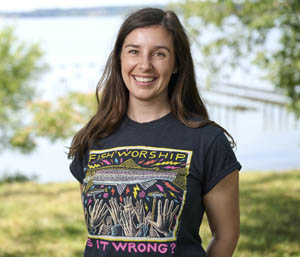
Angelina Dichiera: Chimaerid Sharks in Canadian Waters: A Missing Link in Respiratory Phenotype Diversity
Carbonic anhydrase (CA) is a ubiquitous enzyme that catalyzes the reversible hydration of carbon dioxide and plays a central role in respiratory gas exchange. In fishes, two major respiratory CA phenotypes are recognized: ancestral lineages such as sharks and rays retain plasma-accessible CA at the gills (branchial paCA) for gas exchange; whereas most modern bony fishes rely instead on high-activity CA within red blood cells (RBC CA). These strategies are assumed to be mutually exclusive, yet this paradigm is based on incomplete data from fewer than 0.1% of fish species. Chimaerids (relatives of sharks and rays), challenge this assumption by exhibiting evidence for both branchial paCA and high-activity RBC CA. If confirmed, this finding would indicate that respiratory phenotypes in fishes are not binary but span a broader continuum.
The overarching objective of this research project is to generate the first integrated molecular, biochemical, and phylogenetic characterization of CA isoforms in chimaerids. A major challenge is limited access to these species, which are bottom dwelling and often found in the deep sea. During summer months, however, spotted ratfish (Hydrolagus colliei) can be reliably found near Bamfield Marine Sciences Centre (BMSC) on Vancouver Island, British Columbia. The Reves Fellowship supports a critical international research trip to BMSC, while leveraging the proximity to the premier biennial conference for fish physiologists (International Congress on the Biology of Fish in Vancouver), allowing students to collect thesis data, expand their professional network and develop international collaborations, seeking additional chimaerid samples from the global community.
Students: Second year M.S. Bypass (Ph.D.) students Shyane Masters and Grace Hancock and M.S. student Kelly Gonzalez
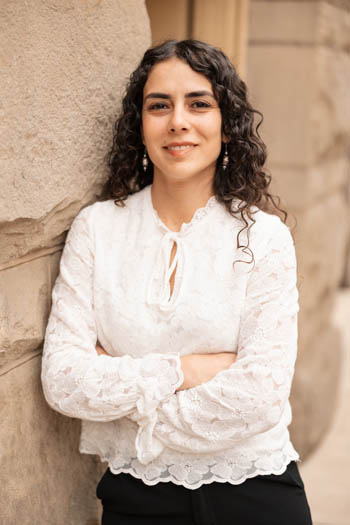
Ameni Mehrez: Youth, Democracy, and Elections in Morocco
This project examines how young Moroccans engage with democratic politics during the country’s September 2026 parliamentary elections. Through interviews and a nationally representative post-election survey, it asks how youth in hybrid regimes — where competitive elections coexist with monarchical authority — perceive political parties, electoral participation, and prospects for change.
Recent youth-led mobilizations, from the Rif Hirak to the GenZ212 movement, point to a politically engaged generation, yet little systematic research examines how that activism intersects with electoral politics. The project addresses this gap through mixed-methods fieldwork in Rabat, Casablanca, and Marrakesh during the summer of 2026, followed by a face-to-face survey of Moroccan voters immediately after the election.
Key questions include how young Moroccans envision political change, whether existing parties represent their views, how beliefs about change translate into voting or other forms of participation, and how perceptions differ across generations and between citizens and political elites.
The project is part of the Arab Elections study, which I co-direct in partnership with the Comparative Study of Election Surveys (CSES), a global network of electoral research spanning more than fifty countries. Covering Morocco for the first time contributes original data to this international infrastructure while advancing comparative work on democratization.
Two William & Mary undergraduates will join the project as full research partners, gaining hands-on training in comparative methods and cross-cultural fieldwork. Findings will be shared at William & Mary and international conferences, and the project lays the groundwork for ongoing collaboration with Moroccan research institutions.
Students: Meghan Savage ’27 and Chloe Smith ‘28
2026 Drapers’ Faculty Fellow
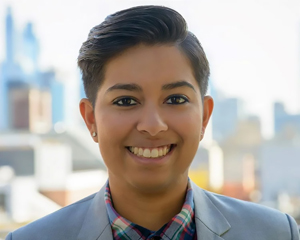
Archana Kaku: Anticolonialism and the Queer Politics of Empire
This project places queer and anticolonial theory in conversation through the archive that constellates around Maharaja Jai Singh of Alwar, a late colonial-era Indian prince who evolved rapidly from being a vaunted favorite of the British Raj to one of its most loathed antagonists, only to end as little more than a marginal note in history books. This research will be based on the India Office Records, particularly the files of the Rajputana Office, which are housed at the British Library in London.
The project stages a series of encounters between queer theory and anticolonial politics. First and foremost, it asks how we might rethink the meaning and possibilities of nonviolence resistance through a character like Jai Singh, whose opposition to the British colonial government largely took the form of biting pranks, veiled slights, and petty inconveniences. It rethinks the colonial education project through the lens of queer critiques of developmental narratives. Finally, examining the ways in which Jai Singh was “cast” as an Orientalist fantasy, the project addresses the way that queer desires might structure both colonial and anti-colonial projects.
Previous Reves Faculty Fellows and their projects are listed online.