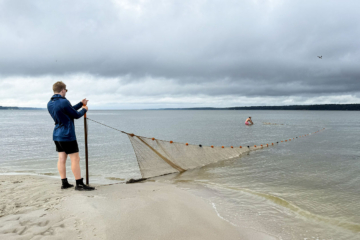
Preliminary results from a survey suggest that an average year class of young-of-year striped bass was produced in the Virginia tributaries of the Chesapeake Bay in 2026.
Rain has an outsized impact on the ecology of rivers, according to a new study led by William & Mary’s VIMS & Batten School.
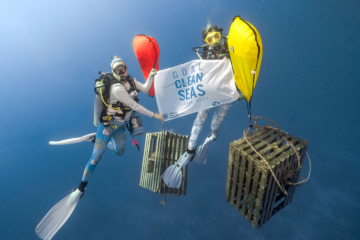
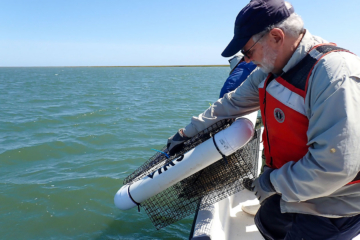
After recovering more than 600,000 pounds of lost fishing traps in just two years, the Nationwide Fishing Trap, Removal Assessment and Prevention (TRAP) Program is announcing 11 new coastal clean up projects in seven states.
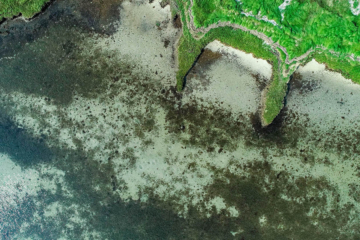
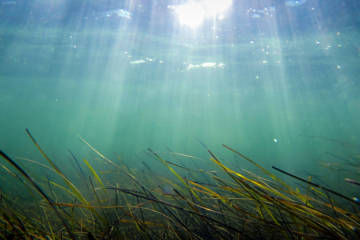
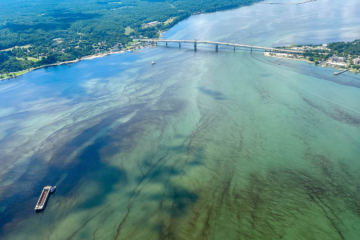
Submerged aquatic vegetation (SAV), one of the Chesapeake Bay’s most important indicators of ecosystem health, increased by 7% to an estimated 89,395 acres in 2025.
A first-of-its-kind study shows ecosystems experience far more cumulative heat than standard measurements capture.
New program turns marine debris removal and other local vessel activity into valuable bathymetric data collection.
The refreshed brand strengthens institutional connections and reflects the university’s brand hierarchy while preserving the legacy of the Virginia Institute of Marine Science.
A new study out of William & Mary’s Batten School & VIMS is redefining how we visualize and track marine heatwaves in estuarine systems.
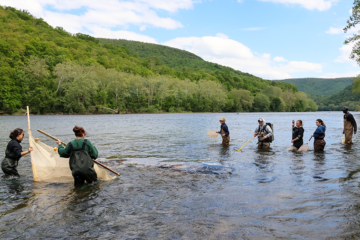
For 56 years, the Roanoke Roundup has immersed scientists and students in the tributaries of Southwest Virginia.
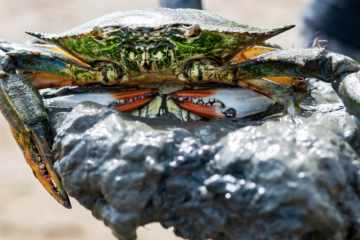
The annual Blue Crab Winter Dredge Survey shows improved juvenile recruitment, but adult female abundance remains low.
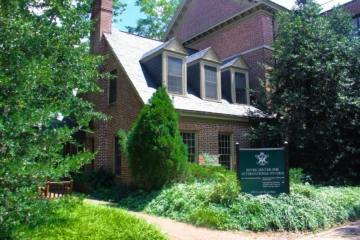
The Reves Center for International Studies has announced the 2026 Reves and Drapers’ Faculty Fellowships.
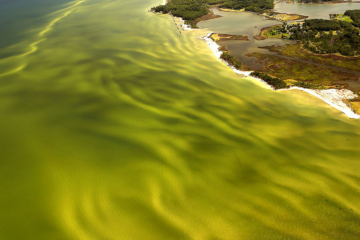
Below-average nutrient runoff is predicted to result in better conditions for Chesapeake Bay life.
The Virginia Scientists & Educators Alliance is administered as a partnership between the Office of Outreach & Engagement at William & Mary’s Batten School & VIMS and Virginia Sea Grant.
Ghost forests have become haunting symbols of sea level rise overtaking land along the Mid-Atlantic coast. But a new study points to even more dramatic land losses in the region’s coastal farmlands.
2026 Plumeri Awards celebrate the achievements of W&M faculty and staff.
The Reves Center for International Studies at William & Mary has announced the 2026 International Student Achievement Award recipients.
Awards will support research at the intersection of applied AI and education, as well as more than two dozen faculty doing a variety of applied research across campus.
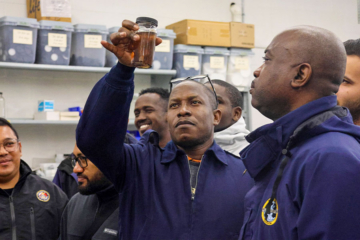
W&M's Batten School & VIMS recently hosted the U.S. Coast Guard’s International Maritime Officer’s Course.
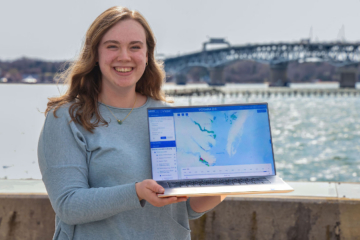
Developed as part of an undergraduate project, the tool unveiled by William & Mary’s Batten School & VIMS brings to life almost 30 years of oyster survey data.
A new Center of Excellence in Environmental Forecasting (CEEF) has been established at William & Mary’s Batten School of Coastal & Marine Sciences & VIMS.
These natural filters are removing more than algae and excess nutrients.
Researchers turn a practical problem into an opportunity for innovation.
The annual Chesapeake Bay Dead Zone Report Card shows unusually persistent hypoxia in July.
W&M's Batten School & VIMS regularly monitor Chesapeake Bay species, including the invasive blue catfish.
The Dean & Director’s Innovation Fund empowers recipients to work at the intersection of research and enterprise.
The new program brings leaders, innovators to William & Mary’s Batten School & VIMS to inspire, engage and collaborate.
The second round of programmatic funding awarded by William & Mary’s Batten School & VIMS totals $1.8M in support of 13 projects focused on removing derelict fishing gear from coastal waters.
Preliminary results from an ongoing long-term survey suggest that an average year class of young-of-year striped bass was produced in the Virginia tributaries of the Chesapeake Bay in 2025.
For some graduate students at William & Mary’s Batten School & VIMS, a new sub-concentration in shellfish aquaculture may be the shining pearl in their degree.
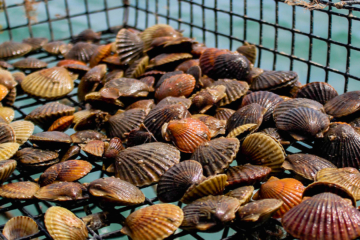
Once locally extinct, the Virginia bay scallop population is increasing exponentially due to restoration work by W&M’s Batten School & VIMS Eastern Shore Laboratory.