
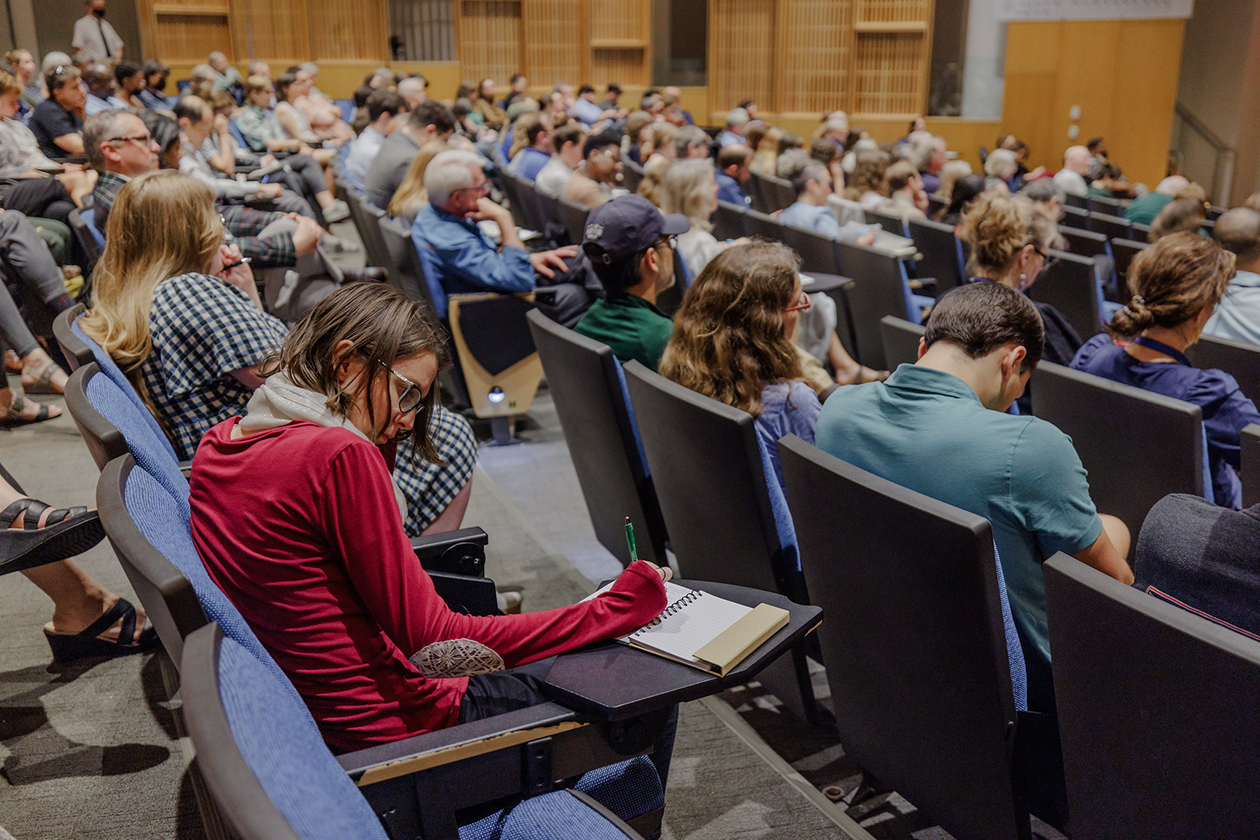
“For 2026: New Republic, New Worlds” will bring scholars, public historians, educators and the public to Williamsburg for the final conference in the “For 2026” series. The conference examines what the Revolution built — the constitutional structures, communities, boundaries and ambitions of the new nation, and how people inside and beyond its borders judged its prospects. Registration is available now at the Omohundro Institute website.
“For 2026” was built backward from this year: five conferences, jointly sponsored by William & Mary, the Omohundro Institute of Early American History & Culture and The Colonial Williamsburg Foundation, each one featuring new scholarship that expands the account of the nation’s founding era. The series began in 2022 as one of the first public events in the country convened with the semiquincentennial in mind. Convening conversations of national consequence is core to William & Mary’s work in its Year of Civic Leadership.
Strategic Cultural Partnerships at William & Mary is a key convener of the “For 2026” conference.
“Four years ago, we set out to imagine what account of the country’s founding might resonate in our nation’s 250th year and be carried into the future,” said Ann Marie Stock, presidential liaison for Strategic Cultural Partnerships. “What this series built – conference by conference, year over year, through dialogue and partnership – is a richer, deeper, more nuanced and honest answer to that questionthan we could have anticipated. This is what civic leadership looks like at the Alma Mater of the Nation.”
The university has spent five years leveraging its position in Williamsburg — alongside two of the country’s leading institutions in early American history — to put emerging research in front of scholars, teachers and the public at the same time. The conference also arrives in a landmark year for Colonial Williamsburg: The foundation marks its centennial in 2026, 100 years of interpreting the place where much of the early American republic was debated into existence.
The conference runs three tracks: scholarly research sessions hosted by the Omohundro Institute, K-12 educator workshops through Revolutionary Educators (RevEd), and sessions on the Williamsburg Bray School through the Slate Seminar.
‘New republic, new worlds’
The 2026 theme takes up the transitional era that followed victory in the War for American Independence — a period of both opportunity and obstacle. Sessions examine the political and constitutional structures the Revolution set in motion and the possibilities that remained in play; how families, communities, boundaries and environments changed under a new order; and how diverse communities across and beyond the new nation’s borders assessed what had been made. The scope is not confined to North America or the Anglophone Atlantic.
Sessions range from Black women and family life under gradual abolition law to Choctaw, Cherokee and Haudenosaunee diplomacy after the war. Other panels take in Spanish Natchez and Creole Louisiana. A closing roundtable, “Publishing the Revolution in 2026,” brings together authors of new books on the Revolution. RevEd sessions pair teachers with Mount Vernon, The Valentine and Colonial Williamsburg educators. Slate Seminar sessions trace the descendants of Bray School scholars from Williamsburg to Wisconsin.
Daytime sessions take place at the William & Mary School of Education. On Friday afternoon from 3:30 to 4:30 p.m.,registrants can visit four sites where Colonial Williamsburg staff will be on hand for questions and conversation:
- The African Baptist Meeting House, where architectural preservation and historic trades staff will discuss the recently raised building, to be dedicated Oct. 9
- The Art Museums of Colonial Williamsburg, where curatorial staff will go deeper on “Colonial Williamsburg: The First 100 Years,” the foundation’s new centennial exhibition
- The Colin G. and Nancy N. Campbell Archaeology Center, with labs open and artifacts from recent discoveries
- The Williamsburg Bray School, with interpretive staff available for tours and questions
That last stop closes a loop the series has been tracking since its second year. In 2023, the Williamsburg Bray School was a subject of active research; the building was dedicated in 2024 and formally opened to the public on Juneteenth 2025; this year, conference attendees walk through it and talk with the interpreters who staff it.
“Colonial Williamsburg has studied America’s colonial past for nearly a century. Its groundbreaking work in archaeology, architectural research, material culture and fact-based storytelling changed the way history is taught,” said Ron Hurst M.A. ’89, chief mission officer for The Colonial Williamsburg Foundation. “The ‘For 2026’ conference assembles the best minds in the field to compare notes and present the latest findings in revolutionary-era history.”
Public events
Both evening plenaries are free and open to the public with no advance registration. Seating is first come, first served. Recordings will be available following the events on the William & Mary and Colonial Williamsburg websites.
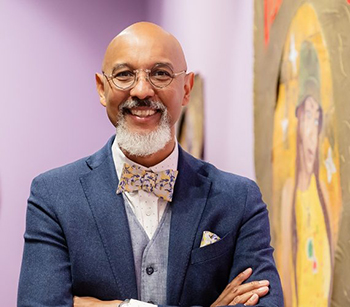
On Friday, Oct. 23, Ronald Angelo Johnson will deliver “Slavery and Black Freedom in the Revolutionary Atlantic World” at the Hennage Auditorium in the Art Museums of Colonial Williamsburg. Seating begins at 4:30 p.m.; the program begins at 5 p.m.
His talk will offer a transnational view of the American Revolution through the lens of diplomacy, foregrounding the work of Black Atlantic inhabitants in Saint-Domingue to resist enslavement as distinctly separate from traditional interpretations of the American Revolution.Johnson is the 2026-27 Mellon Distinguished Scholar in Residence at the American Antiquarian Society and the Ralph and Bessie Mae Lynn Professor of History at Baylor University. His most recent book, “Entangled Alliances,” upon which his talk is based, was published by Cornell University Press in 2025. A book signing and reception will follow.
On Saturday, Oct. 24, Kathleen DuVal will deliver the closing plenary of the series, “The American Revolution and the Survival of Native Nations,” at the Muscarelle Museum of Art on campus at W&M. Seating begins at 4:30 p.m.; the program begins at 5 p.m. Seating for this program is limited. DuVal’s talk takes up the unprecedented challenges the Revolution brought to Indigenous lives, land and sovereignty — and argues that the last 250 years of Native history can also be told as the story of surviving the creation of the United States, placing the Revolution in the longer context of North America’s past, present and future.
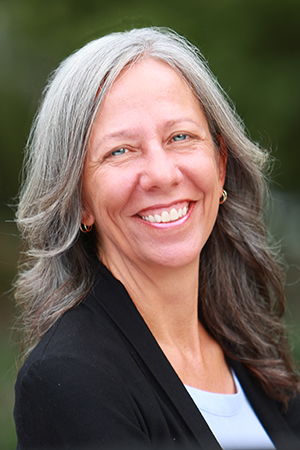
DuVal is the Carl W. Ernst Distinguished Professor of History at the University of North Carolina at Chapel Hill and a Guggenheim Fellow. Her book “Native Nations: A Millennium in North America” won the 2025 Pulitzer Prize in History, the Bancroft Prize, the Mark Lynton History Prize and the Cundill History Prize. She is also the author of “Independence Lost: Lives on the Edge of the American Revolution” and appeared in the Ken Burns film “The American Revolution.” A book signing and reception will follow.
RevEd and Slate Seminar return
The RevEd Teacher Summit returns, convening K-12 teachers, teacher educators and museum and historic site educators for professional development on teaching the Revolutionary era. This year’s lineup features returning presenters from the last four years of the conference.
The Slate Seminar also returns, convened by the W&M Bray School Lab, now part of the Special Collections Research Center at Swem Library. Thanks to special sponsorship the Slate Seminar is free for participants.
“‘For 2026’ has been predicated upon the conviction that meaningful commemoration demands both a passionate, critical examination of the past and intentional efforts to share what we have learned with a broad and inclusive public,” said Catherine E. Kelly, Omohundro Institute executive director and professor of history at W&M. “Along with all my colleagues at the Omohundro Institute, I am exceptionally proud of what our community of scholars has brought to this five-year exploration of the nation’s founding era and the kaleidoscope of people, ambitions, ideas and ideals that set the democratic project in motion. This is a history which we must continue to discover, to study and to share.”
No-cost entry will be available at the registration desk during the conference for William & Mary students, faculty and staff, and Colonial Williamsburg Foundation employees.
One last time
Across five years, “For 2026” has given its closing plenary to Annette Gordon-Reed, Ned Blackhawk, Alan Taylor, Robert Parkinson and now Kathleen DuVal — a roster that traces the argument the series set out to make: The telling of the first 250 years of American history deserves attention.
When the conference series launched in 2022, the semiquincentennial was four years away, and the question was what account of the founding the country would have in hand when it arrived.
It closes in a year that finds the nation at 250, Colonial Williamsburg at 100 and William & Mary marking its Year of Civic Leadership — three institutions arriving at the same moment from different distances.