
Confusion Corner. Sunky G. The Caf. All familiar terms to those already steeped in William & Mary’s lore. Not so much, however, for those first-time visitors considering whether they want to officially join the university.
Helping those potential students and future W&M families find their way around with confidence is part of the drive behind a new long-term program to replace and enhance William & Mary’s signage. The new signs, which will be installed over the next few years, have already started to pop up around campus.
“When prospective students and their families visit campus, we want them focused on experiencing William & Mary and not worrying about finding their way,” said Lisa Keegan, vice provost for enrollment strategy. “Clear, welcoming wayfinding helps visitors navigate campus with confidence and sends a message that they belong here. It’s a small but important part of creating an environment where every visitor feels invited, informed and connected to our community.”
As campus grew over the course of multiple eras, signage proliferated accordingly, University Architect Dan Pisaniello explained. With a campus several centuries old, how could it not? As a result, today’s signs on campus and adjacent streets offer a disjointed multitude of colors, fonts and layouts that don’t cohere and haven’t all aged as well as the Wren Building.
The new signs, in contrast, follow graphic standards adopted earlier this year. The standards specify which sign types may be used and where, along with materials, colors, fonts and more, all to make the campus safer and easier to navigate. Additionally, the new guidelines meet accessibility standards and are consistent with the William & Mary brand.
To make all of it hang together, the new graphic standards were developed by a wayfinding committee that invited W&M personnel devoted to brand management, marketing, enrollment strategy, architecture, design, construction, mapping and more to weigh in.
As a result, the wayfinding signs offer five new campus “neighborhoods,” zones that were developed as part of the 2025 Campus Comprehensive Plan that will help visitors understand where they are in relation to the whole campus: west, central, historic, east and corner campus.
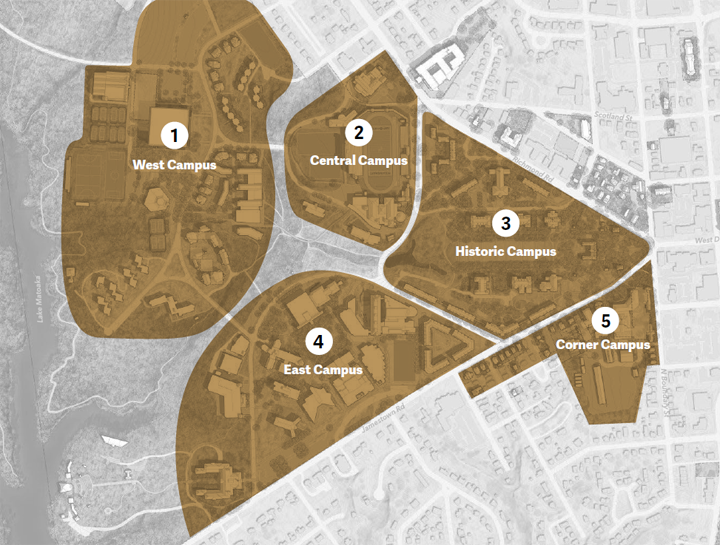
The zones aren’t meant to replace the colorful shared lexicon developed by decades of students. The area many call New Campus informally refers to buildings “built in the space-race era,” Pisaniello noted. That is new when one considers the Brafferton old, but for first-time visitors, East Campus is a more helpful area designation. Referring to New Campus is sure to endure, however.
In fact, the new signage standard clears up some confusion about how formal signage needs to be. Very few people say Earl Gregg Swem Library every time they reference Princeton Review’s No. 3 best college library in the country. Most just call it Swem Library.
Under the new standard, road signs will call it Swem Library, too, because people driving need the quicker version. Signage at the actual library, however, will make sure no one forgets Earl Gregg.
“New signs seem like a small thing,” said Pisaniello. “Yet they convey vital information beyond their literal text, which is itself important. Done well, they denote a level of care and attention, a sense of welcoming, to new and potential members of the community.”
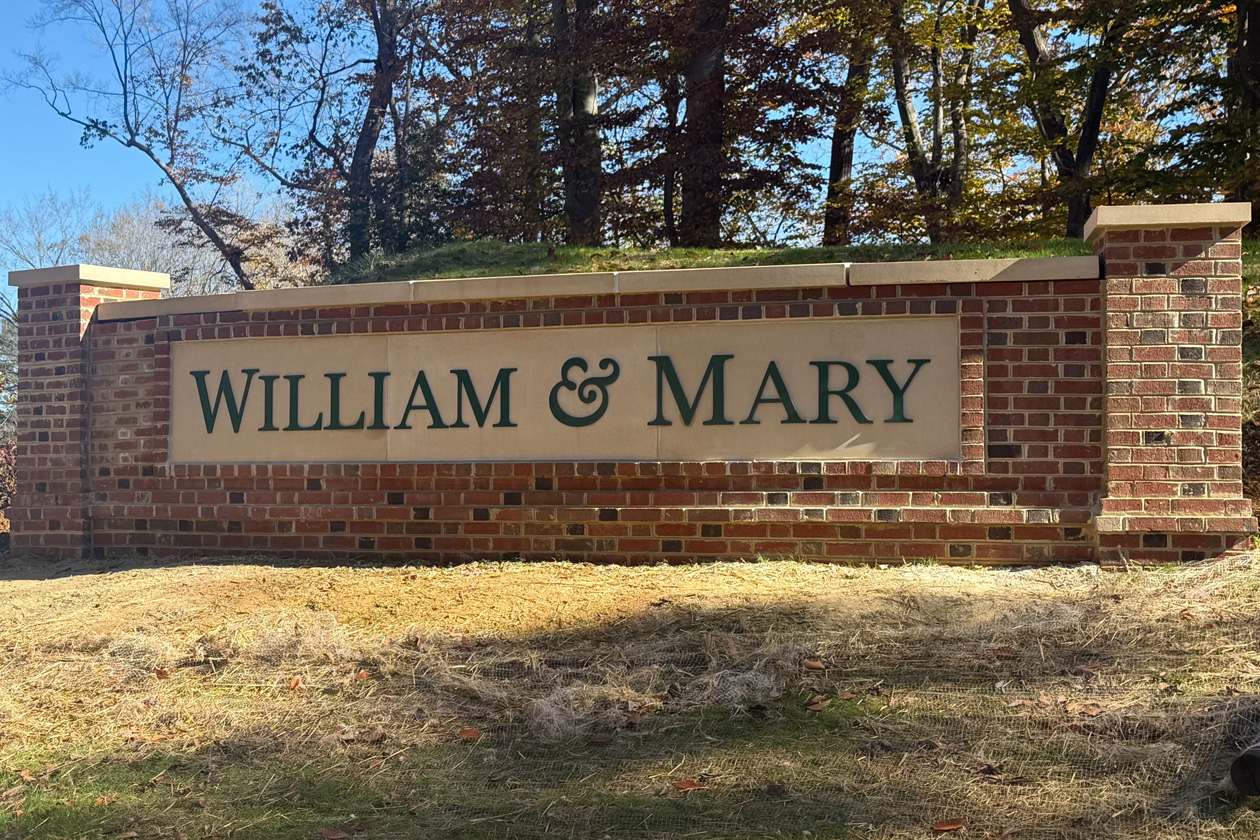
While the new signs and replacements will take a few years to complete, one notable addition just arrived. Key entrances into campus are getting special attention. The corner of Compton Drive and Monticello Avenue gained a new gateway sign last week that acknowledges the intersection as an important entry point to the campus.
It may be new, but the community will find it familiar. The sign is similar in design to the iconic sign where Richmond Road meets Jamestown Road meets North and South Boundary Street meets Dog Street. Better known as Confusion Corner.
Or maybe that’s College Corner, depending on who you ask.
Cortney Will, Associate Director of Leadership & Internal Communications