
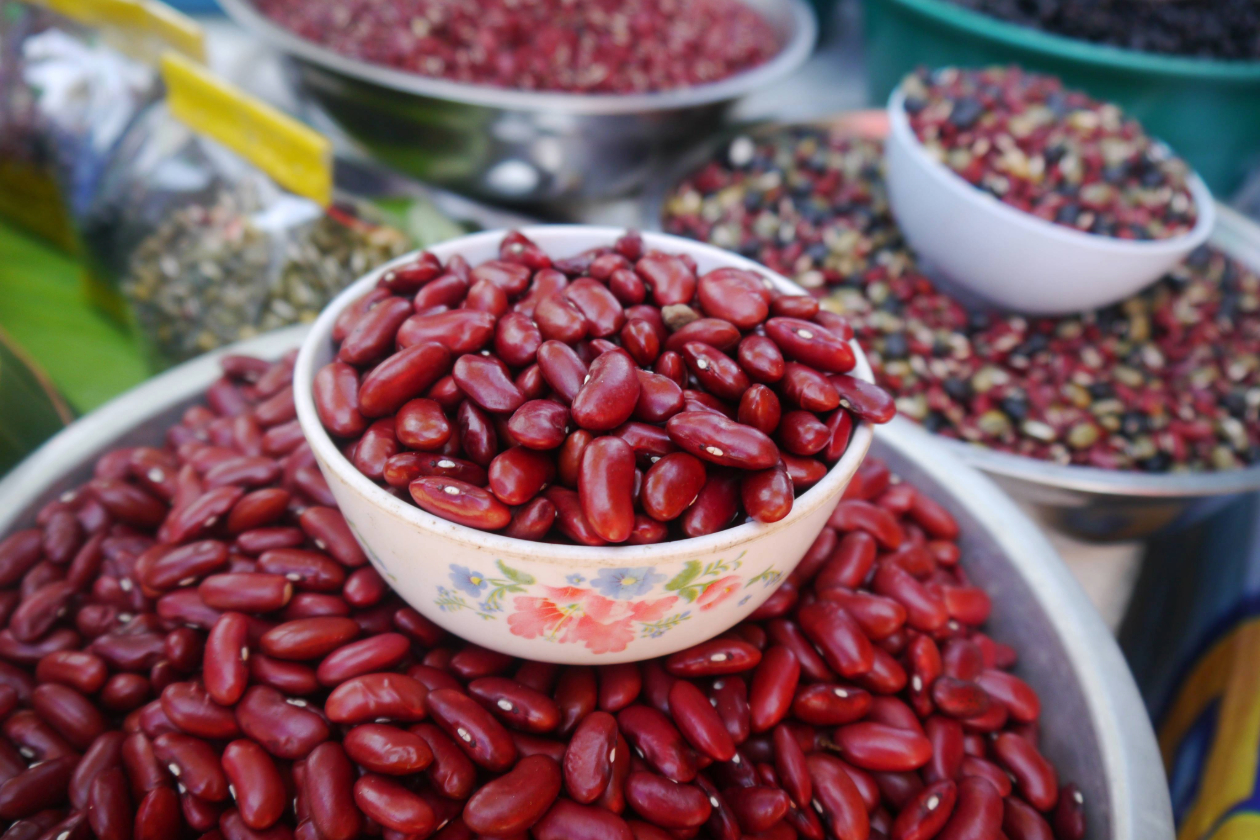
New research from two William & Mary students has found that the risk of heart attack could be significantly lowered with one simple dietary change: increasing the intake of pulses.
But what is a pulse? A food group with diverse options, pulses are edible seeds from plants in the legume family. Some examples include dry beans, chickpeas, lentils and dry peas.
Tara Kamalakantha ‘28 and Catherine Zavela ‘26 found that greater pulse intake leads to a lower chance of getting diagnosed with a cardiometabolic disease (CMD), such as heart disease, stroke or diabetes. Kamalakantha and Zavela’s research finds that even the addition of one serving of pulses to the diet daily could lead to a 19% lower risk of CMD overall. Their research was recently published in Current Developments in Nutrition, a top publisher for peer-reviewed journals focused on nutrition research.
“My main takeaway from (this research) was pulse consumption in the U.S. is extremely low,” Kamalakantha said. “Through our data, adults are consuming less than 0.37 ounces per day, which is not the same in other countries.”
Starting from scratch
Their research was done in the Nutritional Epidemiology and Food System Analytics Lab, run by Associate Professor of Health Sciences Zach Conrad.
Zavela started working on the project several years ago, and published some of the lab’s early work showing trends in pulse intake over the past 20 years. Kamalakantha came in during the latter half of the project and dug through data from over 46,000 adults from 1999 to 2018 from the National Health and Nutrition Examination Survey. The survey focused on multiple areas of nutrition, and Kamalakantha put it through various linear regression models to analyze how pulse consumption tracks with health outcomes. The project was funded by the Pulse Crop Health Initiative at the US Department of Agriculture.
With more than 46,000 data points, you would think that the most challenging aspect of research would be parsing it down. But for Kamalakantha, her biggest hurdle was actually having to start from scratch.
“You really need to figure out what the gaps in literature are and how your research is working to solve those gaps,” she said. “I think for us, our main gap was that there is basically no research on pulses and cardiometabolic disease outcomes.”
Zavela and Kamalakantha’s research focused largely on foods within the legume umbrella, like soy, but they initially didn’t find many papers that actually talked about pulses and their health outcomes. After thorough research, enough articles were found to create a conceptual framework that tied pulses to health outcomes conceptually. More work had to be done to understand whether there was a measurable link.
“The hardest part is relating it all back to all the current literature,” Kamalakantha said. “It’s a lot of back and forth, a lot of tweaking and editing. … I’m really grateful I had the liberty to just go for it.”
Opportunities for research
After their paper was published in May, Kamalakantha then presented her findings to the American Society for Nutrition, where she won first place in the Early Career Poster Competition.
Kamalakantha credits Conrad and his support as vital for her work throughout the project. She describes how his expertise and the resources provided in the lab allow research assistants to make a project their own. In her first year, he was the one who recommended she get involved in the American Society of Nutrition and build her network.
“He’s incredible,” she said. “I not only look at him as my research mentor, but my mentor in general. He cares so much about his lab, and I think it really says a lot about him as a professor because he cares about everyone’s future.”
“I’m continually reminded how fortunate I am to work with students who are so interested in science and dedicated to understanding how the world works,” Conrad said. “I couldn’t do this work otherwise. Tara and Catherine are exemplary in that regard.”
Kamalakantha is still in disbelief that her work is published in a peer-reviewed journal and that she has the opportunity on campus to do the research she does.
“I would definitely say the research opportunities here for undergraduates are what drew me here,” she said. “I feel like I’ve gotten the opportunity to just go into it, start from scratch and work toward a publication, which I wouldn’t have envisioned initially coming here.”
Right now, she’s working on a scoping review to understand how pulses contribute to environmental sustainability, diet costs, and social outcomes. In the meantime, she hopes people take away from her work that adding pulses to their diet is easier than they think.
“I think that’s a really important takeaway: You don’t have to cut something out of your diet,” she said. “It’s just something you can incorporate over time.”
William Oster, Communications Specialist