
Just weeks into the COVID pandemic, Peter Atwater, an economist and William & Mary adjunct professor, noticed a striking divergence in the confidence of white- and blue-collar workers. Those who could work from home suddenly felt much better. Meanwhile, those at the bottom — hospital workers, supermarket clerks and factory workers — felt increasingly worse.
From that, Atwater forecast the American economy would experience not a “V” or “U” shaped rebound, but a “K-Shaped Recovery.” Since then, Atwater has popularized the phrase “K-shaped Economy,” using the capital letter “K” to explain thriving financial markets and investment asset inflation that benefit the wealthy on the arm of the letter, while lower- and middle-income Americans — those on the leg of “K” — struggle with the cumulative impact of soaring food, house and childcare inflation.
The phrase, now widely borrowed by economists and media outlets worldwide, is being referenced to explain the current state of the economy, where the economic divide between those at the top feels extreme.
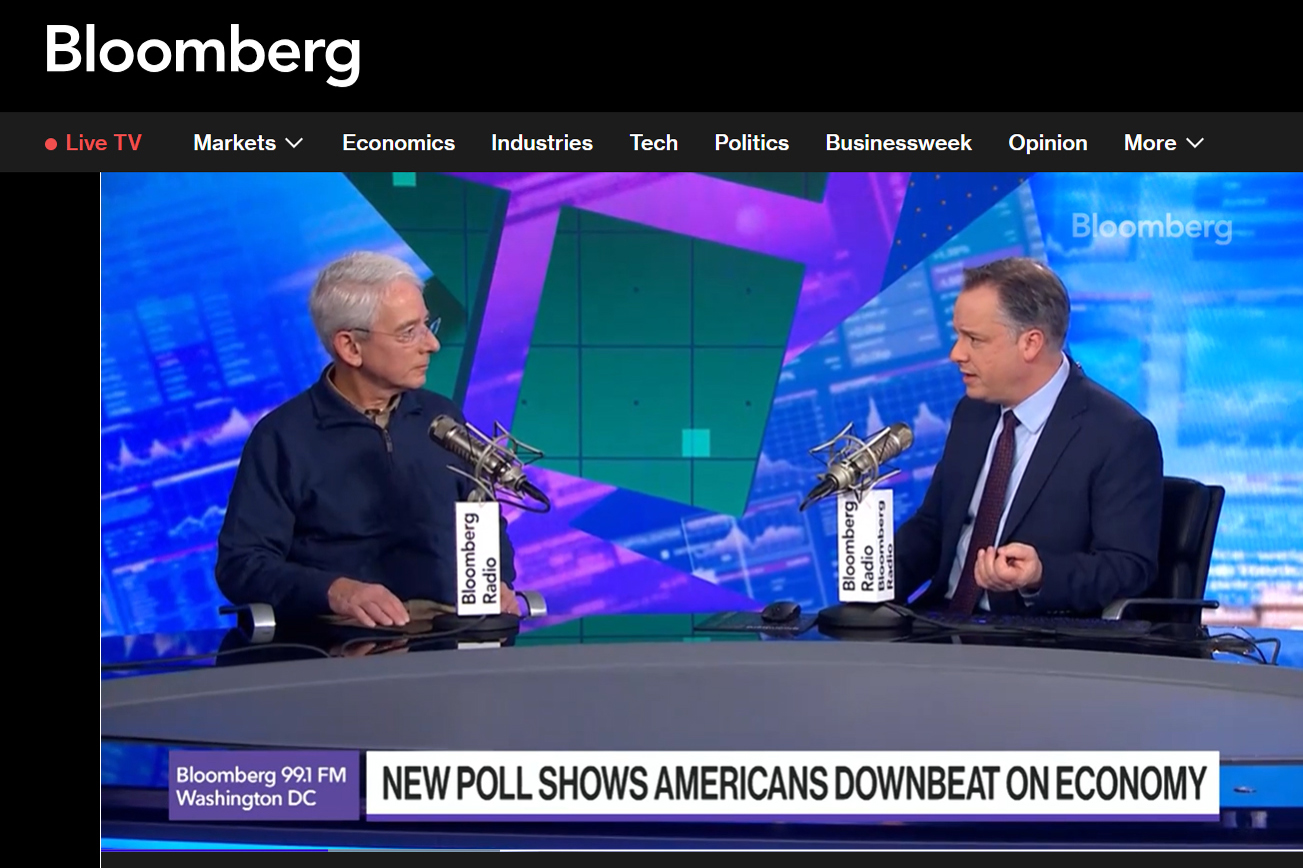
Since the start of November, Atwater has been quoted in multiple reports by national outlets Bloomberg and Marketplace, as well as in articles by the Wall Street Journal, Fortune, Al Jazeera and NewsNation on topics ranging from the “K-Shaped Economy” to artificial intelligence and air travel.
“We’ve seen extraordinary financial market performance. We’ve seen the value of homes remain robust and grow. For those with investable assets, their trajectory has continued upward. Meanwhile, we’re seeing for those at the bottom of the economy deterioration,” Atwater told Marketplace earlier this month.
“They’re later in their payments to their landlord, and they’ve experienced enormous food inflation, (and) the cost of living for those at the bottom has added additional weight. I think of those at the bottom as experiencing this heavy stack of vulnerability, where they feel uncertain and powerless in multiple dimensions at once today.”
Atwater told Fortune, “What we have today is (on one side) a small group of individuals who feel intense certainty paired with relentless power (and) control – and on the other, it is a sea of despair. And that’s the piece that never gets talked about.”
To Atwater, who teaches the freshman course “Confidence and Decision-Making,” the growing confidence divergence between those at the top and bottom has always been at the heart of the story.
“The economics are important,” Atwater says. “But it’s how people now feel that matters most. As we see so often in history, when people feel powerless and uncertain, it impacts their political and social choices, not just what and how much they buy.”
Atwater, whose 2023 book, “The Confidence Map: Charting a Path from Chaos to Clarity” helps readers appreciate why that is the case, worries that those in a position to best help address the plight of those at the bottom don’t appreciate the inherent fragility of our current economy condition. He hopes all the recent attention to the “K-Shaped Economy” will spur action.
“Having talked about the K-Shaped Economy for five years, it feels like we’ve now reached the point where it looks more like a top-heavy Jenga tower,” he says. “To achieve a more balanced economy — and to boost confidence for those at the bottom — steps need to be taken to reinforce the base.”
Staff, University News & Media