
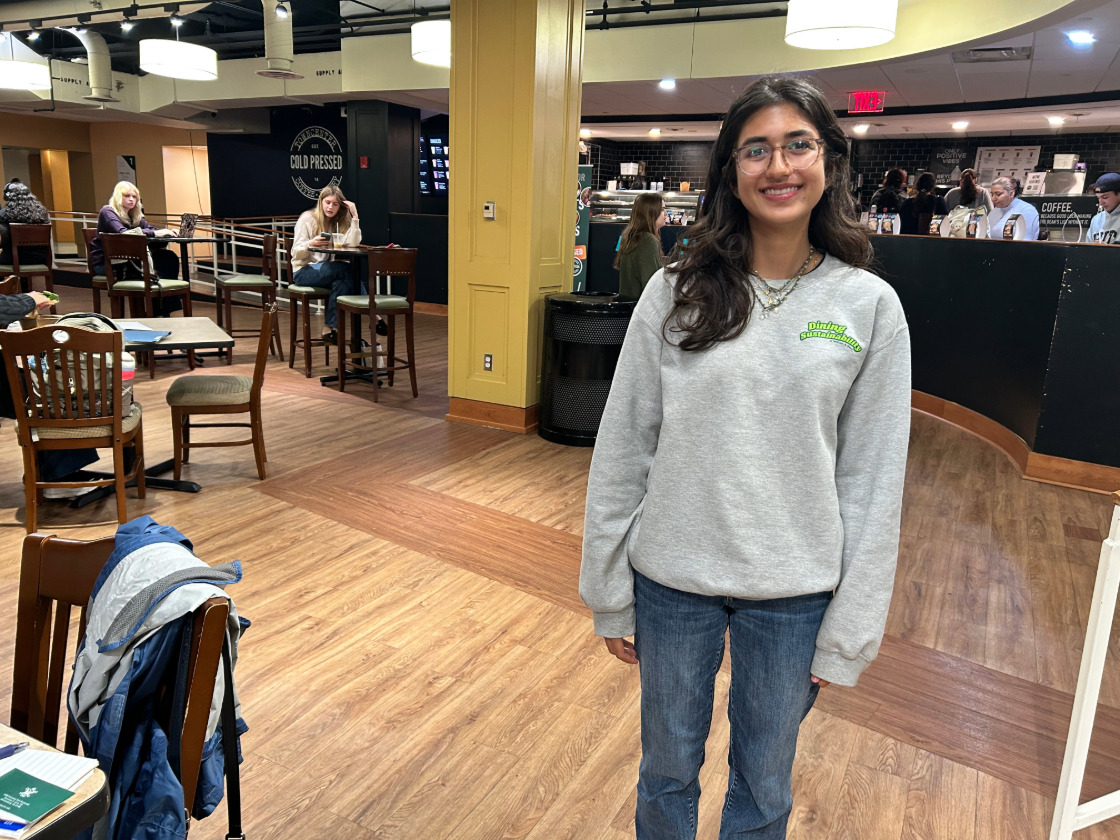
When Virginia officials sought a creative way to inspire residents to waste less food, they turned to college students across the Commonwealth. The winning design came from a William & Mary student whose team of student interns has already helped divert thousands of pounds of organic waste from landfills.
Harriet Ramasamy ’27, co-lead of William & Mary Dining Services’ Sustainability Internship Program, won the Virginia Department of Environmental Quality’s Student Design Competition. Her logo and slogan will serve as the centerpiece of the state’s new “Crack Down on Food Waste” education campaign, featuring a friendly Virginia peanut encouraging residents to reduce food waste.
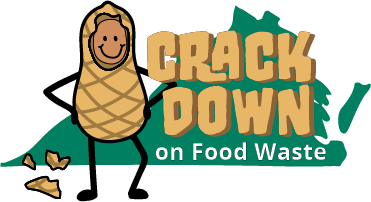
The competition was launched last spring by the Virginia Department of Environmental Quality (DEQ) as part of a broader $10 million initiative to reduce methane emissions by keeping food out of landfills. The effort also supports Virginia’s Food Rescue and Composting Program, which has distributed $8 million to colleges and universities, including William & Mary and its VIMS & Batten School, for sustainability projects focused on composting and food waste prevention.
Ramasamy, a linguistics major, said her involvement with William & Mary’s sustainability initiatives deepened her interest in the issue.
“I have a great passion for sustainability, so this work was right up my alley,” Ramasamy said.
Her winning design will now appear in outreach materials used by state agencies, local governments, K-12 schools and colleges throughout Virginia.
“This campaign will be the focal point of Virginia’s food waste prevention efforts for years to come,” said Sydney E. Thayer ’24, pollution prevention specialist with DEQ’s Office of Pollution Prevention. The agency also plans to feature Ramasamy and her work through its website and social media channels.
The campaign addresses an issue with both environmental and social implications.
Food waste contributes significantly to greenhouse gas emissions as it decomposes in landfills. At the same time, food insecurity remains a growing challenge across Virginia. A recent statewide survey commissioned by the Federation of Virginia Food Banks, the Virginia Department of Social Services and No Kid Hungry Virginia found that 51% of Virginia families with children experienced food insecurity. Rising grocery costs and changes to federal food assistance programs have increased demand at food banks across the state, according to advocates.
Making an impact at W&M
For Ramasamy, the connection between reducing food waste and improving food access is one she sees firsthand through her work leading W&M’s dining sustainability interns.
William & Mary has emerged as a leader in efforts aimed at reducing waste while educating students about responsible consumption.
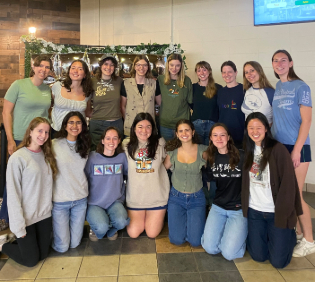
The program is managed by 17 interns, co-led by Ramasamy and Caroline Mullen ’27. Together, they oversee a public composting network that includes 25 collection sites across campus. Using a Green Fee-funded electric golf cart, interns transport compost bins to loading docks where organic waste is collected and transported to a composting facility in Waverly, Virginia.
The impact of those efforts is visible across campus.
Last year, the composting facility returned 72 bags of finished compost, equivalent to 2,880 pounds. Distributed free of charge, half the compost supported landscaping projects managed by the university’s Grounds & Gardens team, while the remainder was shared with the Campus Garden and eight student organizations.
Interns also used the compost during educational planting demonstrations at campus events including Earth Day Bash and Farm Fest, a campus-wide event hosted by Dining Sustainability to celebrate support for local food systems.
Beyond composting, Dining Sustainability interns are helping students understand how food can be produced more sustainably.
Using hydroponics that require 90% less water than conventional farming methods, students have produced more than 300 harvests yielding over 400 pounds of fresh produce across 45 plant varieties. The system, managed by intern Alex Stevenson ’27, produces leafy greens, herbs and edible flowers that are served weekly in the Commons Dining Hall.
Education remains a key component of the program. Throughout the academic year, “Interns on the Street” videos promote food waste awareness campaigns and dining hall events such as “Wipe the Waste,” which helps students understand how much food is discarded and encourages more thoughtful consumption.
More than 10 outreach events were held on Sadler Terrace in the 2025-26 academic year, providing students with information about composting practices and sustainability resources available on campus.
The team has also expanded its efforts beyond food waste. Last fall, Dining Sustainability interns launched a recycling initiative at Zable Stadium. Supported by Green Fee funding, the program equipped the venue with 45 recycling bins and necessary collection equipment. During games, interns worked to reduce contamination in recycling containers, educate fans and divert recyclable materials from landfills. The effort successfully kept 1,014 pounds of waste out of the landfill.
Dining Sustainability also maintains a garden plot within the Campus Garden, providing opportunities for hands-on environmental education.
Ramasamy’s statewide recognition reflects the broader impact students can have when environmental stewardship, education and civic engagement intersect.
“As Virginia launches a campaign that could shape food waste prevention efforts for years to come, its message will carry the creative imprint of a William & Mary student whose work is already helping transform how a campus thinks about food, waste and sustainability,” Thayer said.
Susan Corbett, Communications Specialist