
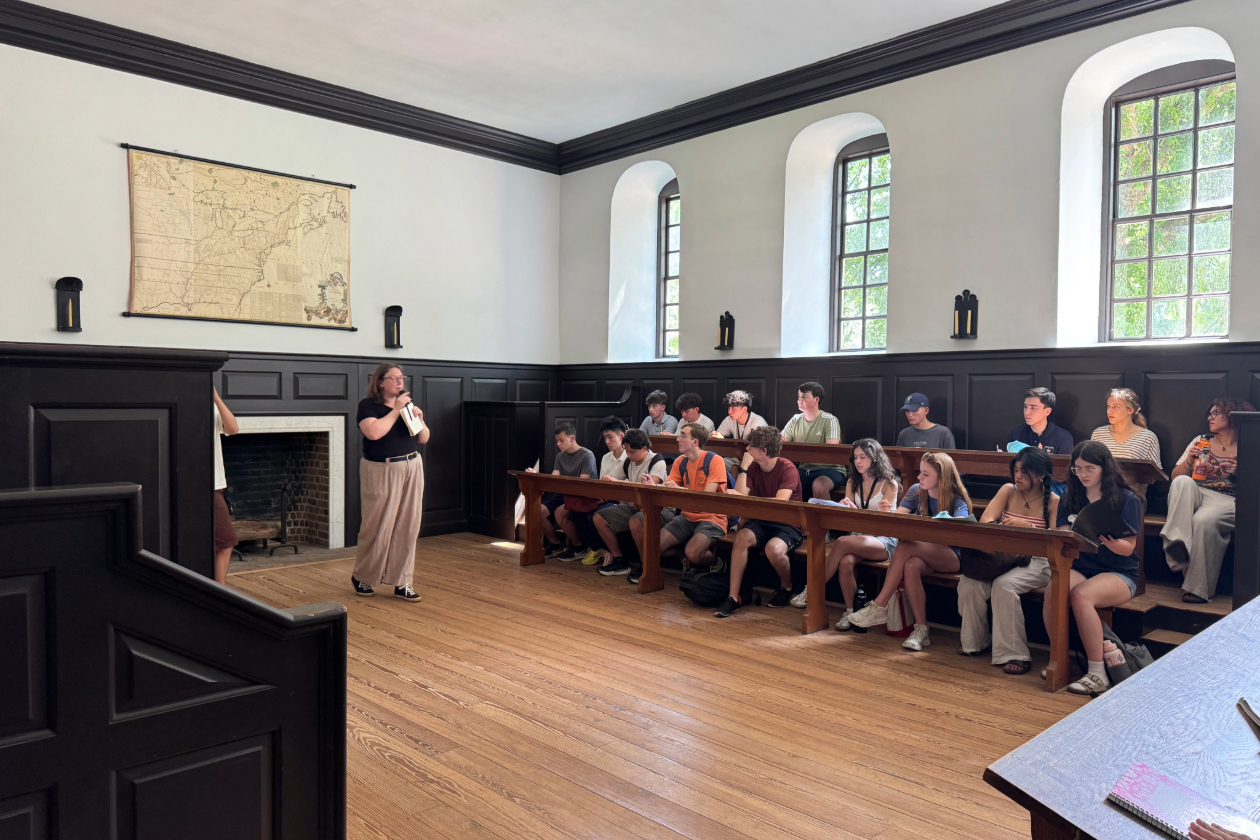
No other university was impacted by the American Revolution quite like William & Mary.
To provide a complete understanding of what the campus and its students were like during this time, Robyn Schroeder developed the Revolutionary Transformation tour this spring, leading up to the nation’s semiquincentennial anniversary.
During the tour, Schroeder, a faculty affiliate and assistant director to the National Institute of American History & Democracy, and her students take participants to the places at William & Mary where some of the era’s most notable moments happened.
By tour’s end, attendees learn how the Revolution transformed William & Mary into the university it is today.
While the tours are on a hiatus this summer and will resume in September, Schroeder recently talked with W&M News about what is usually included. Here are five notable highlights.
The Grammar School
In 1772, Thomas Jefferson was asked by Lord Dunmore, the royal governor of Virginia, to craft an architectural plan to extend the Wren Building. His drawing labeled each of the four schools in the Wren, with the Grammar School located in the east wing of the Wren.
There was stiff competition between faculty to become the master of the Grammar School, mainly because of how many students, and therefore how much more tuition and resources, the school had.
One of the most notable figures in the Grammar School’s history was James Innes, an usher, a term for teaching assistant in the 18th-century. As Schroeder describes from one of her sources, Innes was very charismatic with students. During the revolutionary era, he formed a student militia in an attempt to raise a crew of well-positioned volunteers to take “patriot local control” of resources in Williamsburg.
Faculty, largely displeased with Innes’ plans, attempted to get him fired. The Board of Visitors supported Innes’ efforts at raising a volunteer company, but given he was absent from his post in the grammar school for weeks on end, he was dismissed in August 1775.
The Blue Room
The Blue Room, located on the second floor of the Wren Building, is used most commonly today by students to defend their honors theses or graduate dissertations. But in December 1775, the room was most likely used for the fourth Virginia Convention, which focused on defensive measures and expanding the colony’s armed forces from two regiments to nine. William & Mary was chosen as the location since the College Camp, a military encampment on college grounds, could defend from enemy attack.
Outside of the Virginia Convention, faculty would meet to make difficult financial decisions during financial crises caused by the war. This included selling the college’s plantation, devising law and medical faculty to raise tuition and keep food and timber coming to the college. Phi Beta Kappa members would also hold meetings and debate a variety of topics, including women’s rights, tax policy and abolition.
The President’s House and the ‘French Year’
Occupying Williamsburg from September 1781 to May of 1782, French allies in the Revolutionary War were “very, very popular” in town, Schroeder said. At a time when the university was closed after the British army invaded Virginia, the French brought in money, energy, salons and parties across the city, staying put until they confirmed the war was truly over.
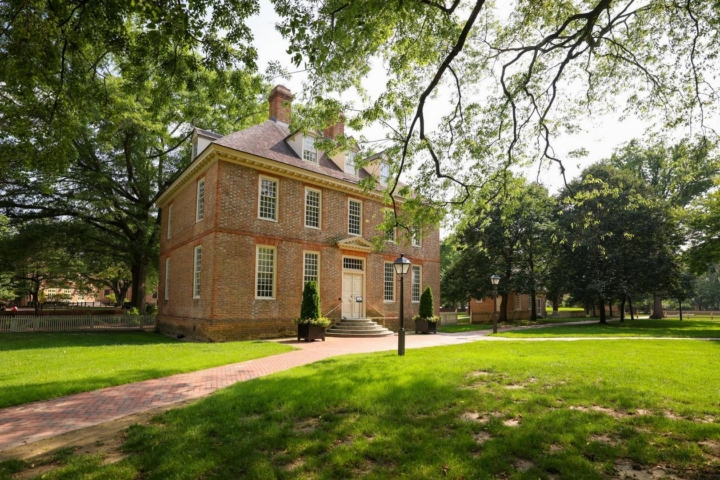
The French held the President’s House for a few months during their stay, with both the house and the Wren Building becoming French hospitals for soldiers injured in the siege of Yorktown.
In November of 1781, the President’s House suffered from an accidental interior fire before the Battle of Yorktown. It was rebuilt in 1786 with money from Louis XVI, the last king of France.
Once the French finally did leave, military officer Marquis de Chastellux was given an honorary doctorate of law degree, which was a source of great pride after spending a year talking to professors, whom he called the “living books” of campus. The French left several notes of gratitude to the people of William & Mary.
The Brafferton
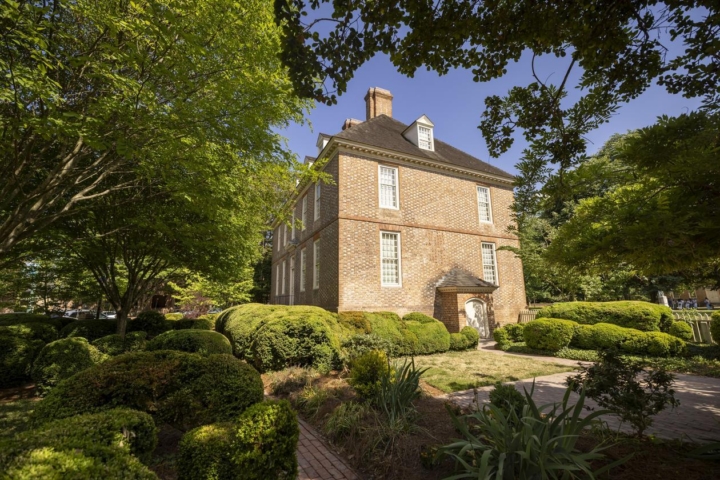
The Brafferton served as a grammar school for Virginia Indian students from its opening in 1723 until its closing in 1779. One of its most notable students was Robert Mursh.
Mursh stayed at the Brafferton longer than most students, studying there for almost five years. A Pamunkey man, he served in the Continental Army in 1775. Unlike those who served for around nine months, Mursh served for seven years, re-enlisting time and time again. Even after being captured at the siege of Charleston as a prisoner of war, Mursh went back and served under the Marquis de Lafayette at Yorktown.
Once the war was over, he became a minister in North Carolina.
The tour also tells the story of Brafferton alumnus and Revolutionary War veteran John Montour, a member of the Delaware tribe. His service reflects the ambiguities and difficult choices the war brought to Native Americans.
Hearth: Memorial to the Enslaved
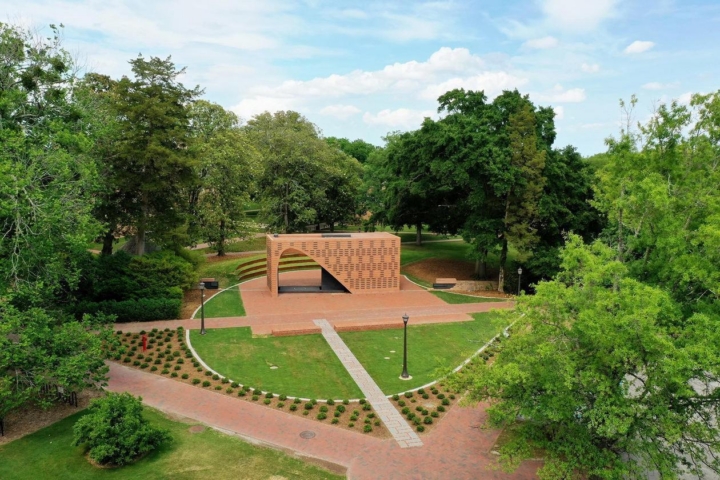
Dedicated in May 2022, Hearth: Memorial to the Enslaved is made with bricks labeled with names of people enslaved by the university.
Schroeder chose Hearth as the endpoint for the tour because, after talking at length about the Revolution, she finds it important to talk about one the university’s most notable yet most complicated figures: Thomas Jefferson.
Jefferson was an essential figure in the nation’s founding. He authored the Declaration of Independence, promoted the universal rights of life, liberty and the pursuit of happiness and served as the third president of the United States. At the same time, Jefferson enslaved more than 600 people, including some who are noted on the Hearth memorial.
Schroeder said that during the Revolution, Jefferson returned to William & Mary as a member of the Board of Visitors in 1779, bringing with him two people he enslaved, both of whom were related to his wife, Martha. Jefferson’s political worldview led to the closing of two schools comprising William & Mary at the time: The grammar school, as part of a vision of public education coming to Virginia, and the divinity school, a casualty of religious toleration and the abolishment of Anglican state religion.
“You’re at an institution which suffers from a revolution,” Schroeder said at the end of a recent tour. “An institution which loses almost all of its money and much of its prestige. There is a man in the center of it who enslaves people but also extends civil liberties for people. That is the story of the tour.”
Today, William & Mary’s Lemon Project is helping bring to light the story of the people enslaved by the university, said Schroeder. The project encourages scholarship on the 300-year relationship between the African American community and William & Mary and continues to build bridges between the two today. It was paramount in the creation of the Hearth memorial, and more names continue to be added as research continues.
Schroeder hopes the tour will help contribute to a fuller telling of the university’s history.
“We’re thinking of this tour as sitting in a larger landscape that helps us to remain grounded in academic history,” Schroeder said.
William Oster, Communications Specialist