
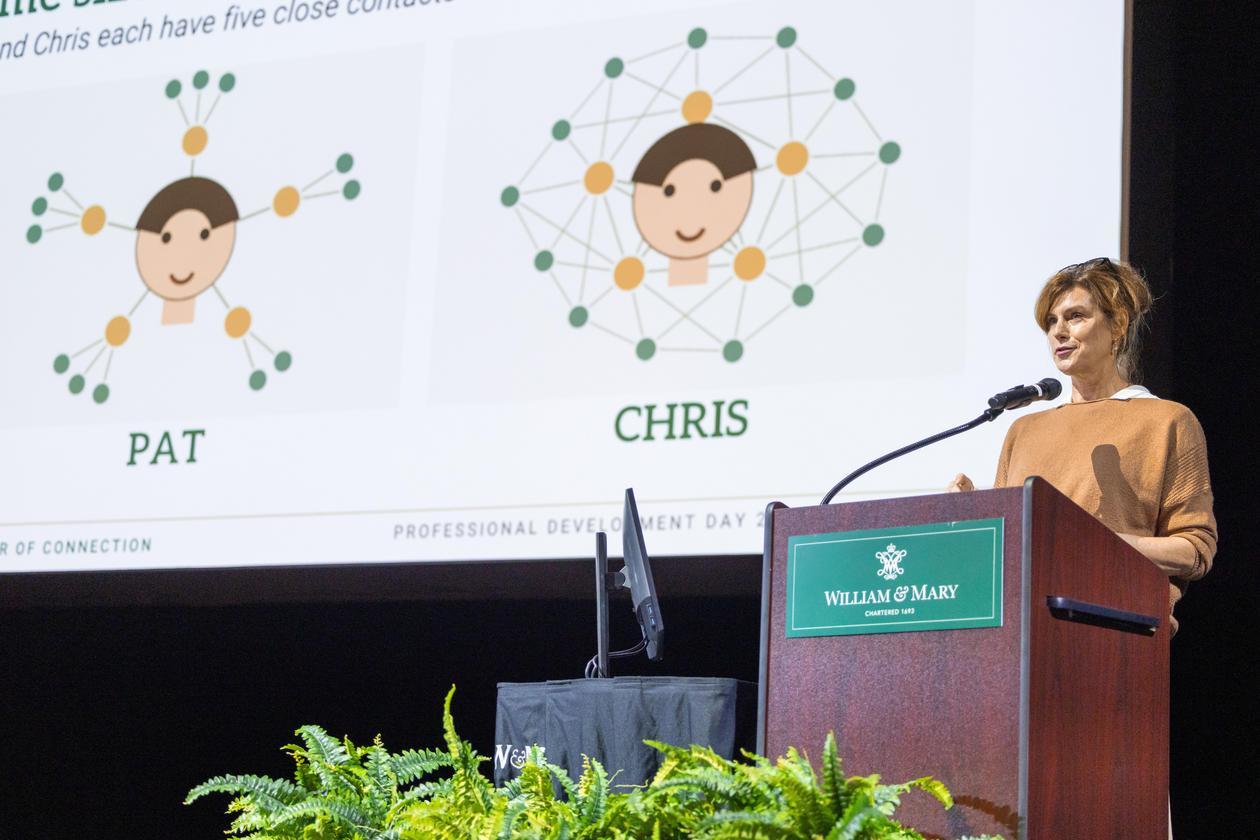
For many people, the word “networking” evokes images of elevator pitches, crowded receptions and awkward exchanges of business cards. But according to organizational behavior expert Inga Carboni, networking is something far more personal and essential.
“The people in your network are the ones you turn to every day,” Carboni told attendees during William & Mary’s 2026 Professional Development Days. “Networking isn’t about climbing. It’s about impact.”
Held in two sessions on consecutive days, the university’s third annual Professional Development Days drew approximately 1,100 faculty and staff to Phi Beta Kappa Memorial Hall. This year’s theme, “The Power of Connection: Building Relationships, Networks and Community for Greater Impact,” focused on helping employees strengthen the relationships that support both professional success and personal well-being.
President Katherine A. Rowe opened the event by emphasizing the value of beginning the academic year with a shared investment in professional growth.
“Being thoughtful with each other about how we do what we do” is part of acknowledging “the hard work of developing a culture of excellence,” Rowe said.
The event is part of William & Mary’s Professional Development Initiative, which reflects the university’s commitment to engaging with one another substantively and respectfully. Launched in 2024 as part of Vision 2026’s Democracy Initiative, Professional Development Days has become a university tradition that draws on campus expertise to help faculty and staff prepare for the academic year. Previous programs have focused on navigating uncertainty, managing conflict and implementing the Aspen Institute’s Better Arguments.
This year’s keynote challenged attendees to rethink many common assumptions about networking.
Carboni, W. Brooks George Professor in the Raymond A. Mason School of Business and author of “Connect the Dots: How to Build, Nurture, and Leverage Your Network to Achieve Your Personal and Professional Goals,” acknowledged that many people have negative reactions to the idea.
“When networking is mentioned, most people are somewhere between ‘no thank you’ and ‘absolutely not,'” she said.
Instead, Carboni encouraged participants to view networking as the intentional practice of building, nurturing and leveraging authentic relationships.
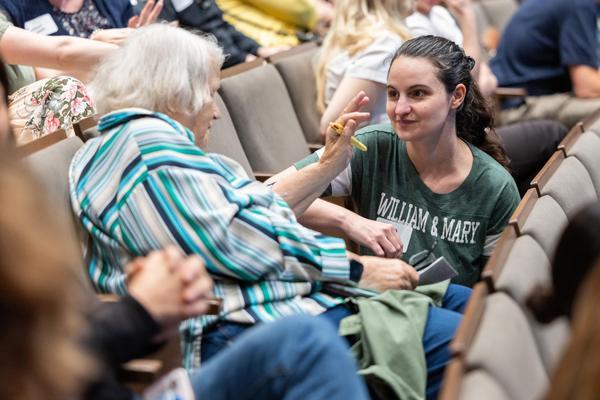
Drawing on research in organizational behavior and social networks, Carboni explained that social capital — the value created through relationships — plays a critical role in both career success and organizational effectiveness. Employees often struggle not because they lack talent or commitment, she noted, but because they have not yet built the connections needed to solve problems, access information or collaborate across boundaries.
“If you only network when you need something, you have it exactly backwards,” she said.
Carboni also stressed that effective networks are not necessarily larger networks. While people may accumulate thousands of contacts on social media platforms, meaningful relationships are what provide support, trust and opportunity.
At the same time, she warned against becoming too comfortable within tightly knit groups. Deep connections provide stability and belonging, but organizations also need “bridges” — relationships that connect people across departments, disciplines and perspectives.
“Left on autopilot, we drift toward sameness,” Carboni said. “Range has to be intentional.”
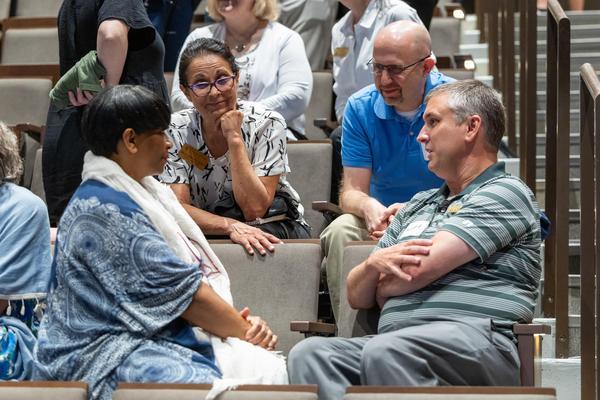
Building those bridges is especially important in creating environments where everyone has a sense of belonging, she explained. Diverse networks expose people to new information, new ideas and different viewpoints, helping individuals and institutions avoid the risks of isolation and groupthink.
Carboni outlined several practical strategies for developing stronger networks, including maintaining a mix of deep and shallow relationships, reconnecting with dormant ties she dubbed “sleepers” and leading with generosity.
Sleeper relationships, she said, are often among the most valuable professional resources people possess.
“They’re the true powerhouse of a professional network,” Carboni said, encouraging participants to reconnect with former colleagues, classmates and collaborators.
She also challenged attendees to approach networking through service rather than self-promotion.
“Open with an offer, not an ask,” she said. “Networking done right is generous and useful.”
Chief Human Resources Officer Anne Roemer followed the keynote with practical exercises for turning connection into action. Roehmer encouraged participants to be fully present in conversations and to resist the tendency to multitask, emphasizing that meaningful relationships begin with genuine attention and understanding.
Throughout the day, attendees were reminded that strong networks benefit not only individuals but also teams and institutions.
“Your network makes you better at your work,” Carboni said. “Your network runs through you, but it isn’t just yours. You’re making your team stronger.”
She concluded with a call to action: “Connect one dot, build one bridge, wake one sleeper.”
Carlane Pittman-Hampton, chief of staff and chair of the Professional Development Days committee, said the annual event reflects William & Mary’s ongoing commitment to strengthening its community through engagement and learning.
Faculty and staff will have additional opportunities to put those lessons into practice this fall. The university is planning a networking event, “Coffee & Connections,” in October, designed to help employees continue building relationships across campus.
Susan Corbett, Communications Specialist